
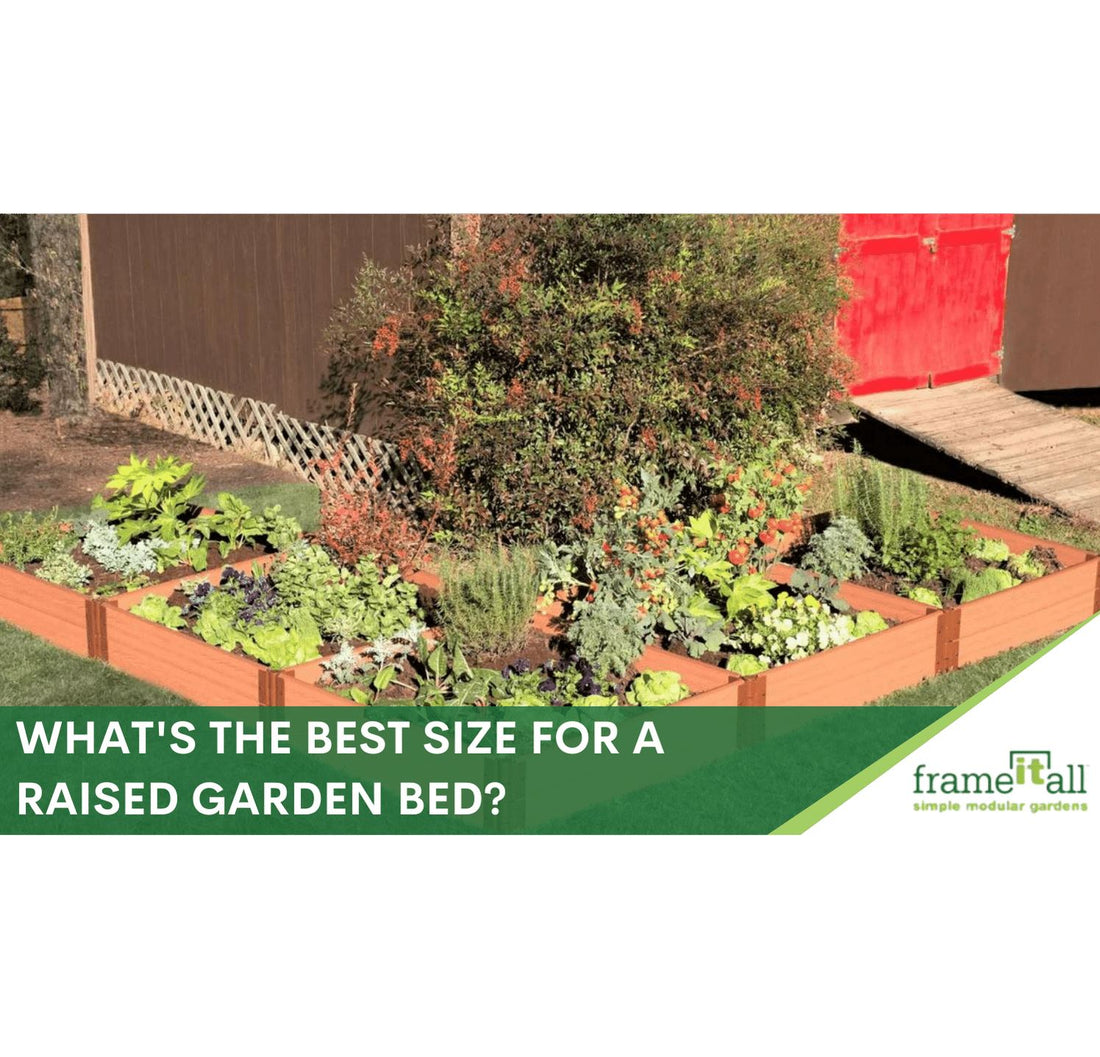
Raised garden beds are a total game-changer, offering better soil, great drainage, and a welcome break for your back. But one simple mistake in the planning stage can lead to a season of frustration. We’ve all seen it: a bed so wide you can't reach the middle without stepping on your precious soil. Or one so shallow your carrots hit a dead end. Getting the size raised garden bed right from the start is the secret to a low-maintenance, high-yield garden. It’s not just about looks; it’s about creating a space that truly works for you and your plants.
And if you're a gardener, you understand the importance of cultivating nutritious vegetables and herbs in the right conditions. A raised garden bed is an effective solution for growing produce in limited spaces or on hard surfaces, but what is the best size for a raised garden bed?

Most people think that one raised bed should be at least 3 feet wide and 4 feet long, deep enough to ensure good drainage and at least 12 inches of soil. This size allows for easy access to plants in the middle and enough space for your crops to thrive. Beds this size are also perfect for gardeners who use wheelchairs, because it's a width that accommodates wheelchair access.
On the other hand, a raised garden bed that is 3 feet wide and 4 feet long and 36 inches deep is the ideal size for cultivating a healthy and bountiful garden. However, most of the times the answer is not as easy, and the perfect width and length will depend a lot on your particular situation. For example, 2 feet beds are great for areas with limited space, or if you want to create a low-maintenance garden. Also, if you're going to be gardening in containers, the size of your containers will determine how wide and long the bed should be.
If you're planning to build your own raised garden bed, you might be wondering what the best size for your garden bed should be. Keep reading this guide to find out the recommended size for raised garden beds and other factors you should take into account.
Planning the Perfect Raised Garden Bed Layout

If you're planning to build your own raised garden bed, you'll need the following materials:
Wooden boards
Galvanized screws
Clamps
Soil
Compost
Waterproof liner
Hand saw or circular saw (optional)
The process of building a raised garden bed with the perfect bed dimensions is relatively straightforward and can be done in a few simple steps:
Choose the location and size of your garden bed. Consider the height of a raised garden bed that will be comfortable for you to work with.
Cut the wooden boards to the desired length and width.
Arrange the boards in a rectangular shape and frame a garden bed by attaching them using screws and clamps.
Add a waterproof liner to the bottom of your garden bed (optional).
Fill the bed with soil and compost. Keep in mind that your soil volume may vary depending on the depth and width of your garden bed.
Level the soil and water it thoroughly to ensure proper hydration.
With these basic steps, you'll be on your way to enjoying the benefits of growing your own plants and vegetables. If you find the process daunting, consider opting for one of our garden bed kits that comes with pre-measured and pre-cut materials.
A Simple Guide to Raised Garden Bed Dimensions

The ideal width for a raised garden bed is around four feet. This width allows easy access to the plants from both sides of the bed, while still providing enough planting space for a variety of crops. If your garden bed width is too narrow, it can be difficult to reach the plants in the middle without stepping into the bed. If your garden bed is too wide, it can be difficult to reach the plants in the middle without using a ladder or step stool.
The ideal length for a raised garden bed can vary depending on your available space and gardening needs. Most gardeners recommend a length of between six and twelve feet. A length of 6 feet allows you to plant a variety of crops without being too cramped, while a length of twelve feet provides even more planting space for larger gardens. It's important to choose a length that fits your gardening needs and allows for easy access to your plants.
The depth is also important when considering the size of a raised garden bed. Deep-rooted vegetables, for instance, would require a deeper bed than shallow-rooted plants. A depth of six to twelve inches is usually sufficient for most plants. If your soil is heavy clay, however, it may be necessary to go deeper.
The optimum size for raised garden beds is around four feet wide and eight feet long. This size provides a good balance between planting space and ease of access. However, the size of your raised garden bed will ultimately depend on your available space, gardening needs, and budget.
Choosing Your Bed's Length and Width: What to Consider

Choosing the appropriate size of a raised garden bed is important to ensure efficient utilization of space and plants' optimal growth. Apart from considering your available space, the following factors should be taken into consideration:
First, consider the type of plants you want to grow in your raised garden bed. Some plants like deep-rooted vegetables, require more soil depth than others. Hence, the raised bed should be deep enough to accommodate such plants to enhance their growth and avoid overcrowding.
Secondly, accessibility should be considered. The position of the raised garden bed should allow for easy access and maintenance. Hence, the bed width should be proportionate to the gardener's reach to make it easier to reach all plants on the bed.
Lastly, the garden bed's size should also match the gardener's capacity for maintenance. If the raised bed is too extensive, it could be challenging to maintain, and gardening activities could become overwhelming, leading to poor productivity. Therefore, a manageable size that fits the gardener's capacity should be chosen.
Tips for Building and Materials
When you're ready to build, thinking through your design and materials will save you a lot of headaches later. The best size for your raised bed really depends on the space you have, so start by measuring your area. For depth, a good rule of thumb is at least 10 inches of soil, which gives the roots of most vegetables, even carrots, plenty of room to grow. If you're building with wood, plan your cuts around standard lumber sizes, like 8-foot boards, to reduce waste. This requires some careful planning but can save you money on materials.
Of course, wood isn't your only option. If you want to skip the hassle of cutting lumber and protect your garden from rot, consider using a kit. Our composite raised garden beds are made from recycled plastic and sustainably sourced wood fibers, so they won't break down over time like traditional wood. Plus, our snap-lock system makes assembly incredibly simple—no tools required. This way, you can spend less time building and more time gardening, with a durable bed that will last for years.
Common Raised Bed Gardening Mistakes to Avoid
We all make mistakes, but a few common slip-ups in raised bed design can be easily avoided. The biggest one is making the bed too wide. If you can't comfortably reach the middle of the bed from either side, you'll be tempted to step into it to weed or harvest. This compacts the soil, which is exactly what you're trying to prevent by using a raised bed in the first place. Stick to a width of four feet or less to keep every plant within arm's reach and your soil light and airy.
Similarly, beds that are too long can become an obstacle in your yard, tempting you to step over them. Another frequent issue is not making the bed deep enough. A shallow bed of only a few inches doesn't give plant roots enough space to establish themselves, leading to stunted growth. Ensure your bed is deep enough for what you plan to grow. Our garden builder kits are designed to be modular, allowing you to create a layout with the perfect dimensions for your space and plants, ensuring they have all the room they need to thrive.
Find Your Perfect Garden Box Size with Frame It All

Are you looking to take your garden to the next level? Look no further than Frame It All for the perfect raised bed. Not only do they have the tools and materials needed to install the raised bed, but their raised beds come in a variety of sizes to fit the length of your garden beds.
Worried about having too much or too little space? Consider multiple raised beds for a customizable and versatile garden. And don't forget about the depth of a raised garden box - Frame It All has options for both shallow and deep boxes, depending on what you plan to grow. Take your gardening game to the next level with the perfect raised bed from Frame It All.
Frequently Asked Questions About The Best Bed Dimensions

First Things First: What Is a Raised Garden Bed?
Raised garden beds are a gardening solution that involves creating a garden bed above ground level, with soil contained within a structure.
What Are the Benefits of a Raised Garden Bed?
There are many benefits to using raised garden beds, including better soil drainage, greater control over soil quality, and improved accessibility for gardening.
Is There a Perfect Size for a Raised Garden Bed?
The optimum size for a raised garden bed will depend on your gardening needs and the available space. In general, a width of around 3-4 feet and a length of 6-8 feet would be suitable for most home gardens.
How to Plan Your Raised Bed Garden Layout
There are many ways to layout a raised bed garden, but one popular method is to divide the bed into equal squares or rectangles to create a formal garden layout. This makes it easy to plan and manage your growing space.
Getting the Width Right for Easy Reach
The width of a garden bed will depend on a few factors, including the size of your garden and the available space. Ideally, a garden bed should be at least 30cm wide to provide enough growing space for plants.
Width Recommendations for One-Sided Access
Sometimes, the best spot for your garden is along a fence, wall, or the side of your house. In these cases, you can only access the bed from one side, which changes the ideal width. The main goal is to be able to reach every plant without stepping into the bed and compacting the soil. A bed that’s too wide will make weeding, watering, and harvesting the back row a real chore and could even lead to back strain. Planning for this ahead of time ensures your gardening remains enjoyable and ergonomic.
For beds with one-sided access, a width of 2 to 2.5 feet is generally recommended. This dimension is based on the comfortable reach of an average adult, allowing you to easily tend to plants at the very back. This narrower design is perfect for turning tight spaces into productive garden areas. If you're working with a unique space, you can use custom project kits to build a bed that fits your specific layout perfectly, ensuring no part of your garden is ever out of reach.
Choosing a Length That Fits Your Space
The length of a raised garden bed will depend on your gardening needs and the available space. However, a length of 6-8 feet is a good starting point for most home gardens.
Ready to Build? A Simple Step-by-Step Guide
There are many ways to build a raised garden bed. One common method is to use wooden planks or bricks to create a rectangular structure, which is then filled with soil. You can also purchase pre-made raised bed kits or build your own raised beds using a planter or other container.
How to Calculate Your Ideal Growing Space
The amount of growing space you need will depend on the number of plants you want to grow and the size of those plants. As a general guideline, each plant should have at least 6-12 inches of space around it for optimal growth.
Structural Considerations for Longer Beds
A long, continuous raised bed can look stunning and seems like a great way to maximize planting space, but it introduces a few structural challenges. Once you build beds longer than 10 or 12 feet, the sheer weight of the soil can cause the sideboards to bow outwards. This can weaken the bed's structure over time. To prevent this bowing, you'll need to install cross-bracing or central supports to keep the sides straight and secure. Also, consider your workflow in the garden. A very long bed means a long walk to get to the other side. You might be tempted to take a shortcut by stepping into the bed, which compacts your carefully prepared soil. Using a modular garden bed kit can help you create long, stable runs with built-in support, simplifying the entire process.
How Deep and Tall Should Your Garden Bed Be?
Choosing a Depth for Different Plants
Let's talk about depth. The amount of soil your plants have access to is a game-changer for their health and growth. Think of it as their foundation. Most common garden vegetables, herbs, and flowers do well with a soil depth of at least 10 inches. This gives their roots enough room to stretch out and absorb nutrients. However, if you're dreaming of harvesting your own potatoes, carrots, or other deep-rooted vegetables, you'll want to give them more space. For these types of plants, a depth of 12 inches or more is ideal. This ensures they have plenty of room to develop fully without hitting a barrier. When you choose a raised garden bed, considering what you want to grow first will help you pick the perfect depth from the start.
While soil depth is for your plants, the overall height of the bed is really for you. The height of your garden bed walls determines how much you have to bend over while planting, weeding, and harvesting. A taller bed, say between 24 and 36 inches, can make gardening much more comfortable, especially if you have back or knee issues. It brings the garden up to a more accessible level, turning it into a waist-high workstation. This thoughtful design choice can make a huge difference in your enjoyment and ability to maintain your garden long-term. Frame It All's modular system makes it easy to build a garden at a height that feels just right for your body and your gardening style.
Tips for a Wheelchair-Accessible Garden Bed
To ensure wheelchair access in your raised garden bed, make sure the bed is wide enough to accommodate a wheelchair or mobility scooter. You may also need to consider the height of the bed and provide ramps or other means of access.
Consider Sunlight and Water Access
Before you start building, let's talk about location. The best spot for your raised bed is one that gets at least six hours of direct sunlight each day, as most vegetables and flowers need this to really thrive. Take a day to watch the sun's path across your yard to find the brightest areas. Another key factor is water access. You'll want your garden to be reasonably close to a spigot. Trust me, hauling heavy watering cans across the yard gets old fast. Choosing a spot that’s convenient for watering, weeding, and harvesting will make your entire gardening experience much more enjoyable and sustainable in the long run.
Orient Your Beds for Optimal Sun
Once you've picked a sunny spot, think about how you’ll position your beds. To give all your plants an equal chance at soaking up the sun, it’s best to orient your beds in a north-south direction if possible. This means the longest sides of your bed will face east and west. This layout prevents taller plants from casting long shadows over their shorter neighbors as the sun moves across the sky. If you plan on growing tall crops like corn, pole beans, or staked tomatoes, plant them on the north end of the bed. This way, they won’t block the sun from reaching lower-growing plants like lettuce or carrots.
Visualize Your Space Before Building
This might sound a little extra, but I highly recommend creating a "ghost" version of your garden before you commit. Grab some stakes and string and mark out the exact dimensions of your beds and pathways right on the ground. This simple step helps you visualize how the layout will fit in your space and how it will feel to move around it. Is there enough room for your wheelbarrow to pass through the paths? Can you comfortably kneel and work without feeling cramped? Making adjustments at this stage is much easier than after you’ve built and filled your beds. It’s a five-minute task that can save you hours of frustration.
Common Garden Layouts to Consider
The beauty of raised garden beds is that you can create a layout that perfectly suits your space and style. You don't have to stick to a single rectangle. Consider a "Twin Garden" layout with two parallel beds and a central walkway, which creates a nice sense of symmetry. For larger spaces, a "Four-Garden Classic" with four square beds arranged in a grid can create a beautiful and productive kitchen garden. If you're working with a smaller area, a "Border Garden" running along a fence or the side of your house can be very effective. The layout you choose will define the look and feel of your garden, so have fun exploring different configurations.
Planning Your Pathways: Will a Wheelbarrow Fit?
Yes, you can use a wheelbarrow in your raised garden bed. However, you may need to consider the width and height of the bed to ensure it is accessible for your wheelbarrow.
Key Takeaways
- Keep Your Garden Within Reach: Design beds no wider than four feet for two-sided access, or 2.5 feet if you can only reach from one side. This prevents you from compacting the soil by stepping into the bed to weed or harvest.
- Build for Your Plants and Your Body: While a soil depth of at least 10-12 inches is essential for healthy root growth, the overall height of the bed walls should be set for your comfort, reducing strain on your back and knees.
- Plan Your Layout Before You Build: Consider sun exposure, water access, and pathway width before you start. A quick mock-up with stakes and string helps you visualize the space and ensures your garden is both functional and enjoyable.