

Frame it All container gardening systems help homeowners create a controlled growing environment when they have a patio, balcony, small yard, poor soil, or simply want more control over each plant's growing conditions. The most reliable results come from treating the garden as a system: match the container to the crop, provide drainage, use a loose growing medium, then manage light and moisture throughout the season.
Explore durable Frame it All raised garden beds for a more permanent growing setup.
What is container gardening?
Short answer: Container gardening means growing plants in vessels instead of directly in the ground. The system works when each crop has enough root space, drainage, container mix, sunlight, and moisture. It is a practical way to garden on patios, balconies, small yards, or anywhere the native soil is difficult to use.
Container gardening is the practice of growing plants in a portable or fixed vessel rather than directly in the ground. A successful container combines adequate root space, drainage, a lightweight growing medium, enough sunlight, and a watering routine that fits the crop. That control makes it useful for beginners, renters, small-space gardeners, and anyone working around difficult soil.
It is also more flexible than a single row of pots. A container garden can include a few herb pots by the kitchen, a group of vegetable planters on a deck, or a larger modular system that can be expanded as your garden grows. The goal is not to copy a ground garden in miniature. It is to build a growing environment that suits the space you actually have.
How do you choose containers for a healthy garden?
Short answer: Choose a container based on the crop's mature root space, the available sunlight, drainage, wind exposure, and how easily you can reach it. A stable vessel with open drainage and enough depth will usually outperform a decorative pot that is too small or stays wet after watering.
Choose the container after choosing the crop and the final location. A vessel that is too small dries quickly and restricts roots, while a very large container can stay wet longer than a young plant can use. The container should be stable, safe for outdoor use, easy to access, and large enough for the plant's mature root system.
- Size: Use the plant tag or seed packet as your starting point. Compact greens and many herbs can grow in smaller vessels, while tomatoes, eggplants, cucumbers, and larger peppers need more root room.
- Depth: Select enough depth for the root system, especially for taprooted crops such as carrots. Shallow containers are better suited to lettuce, radishes, and many herbs.
- Material: Plastic is light and easy to move. Terracotta breathes but dries faster. Fabric pots drain well but can need more frequent watering. Composite planters offer a durable, structured option for outdoor spaces.
- Stability: Tall plants and trellised crops can catch wind. Use a wide base, group containers, or place them where a wall provides shelter without blocking the needed light.
- Access: Leave enough room to reach every plant, check the soil, harvest, and carry a watering can or hose between containers.
Drainage is not optional. Every outdoor container should have open drainage holes near the bottom, and the holes should not sit directly against a sealed surface. Raise a pot slightly with feet or a stable support so excess water can escape. Do not add a thick layer of gravel to the bottom as a substitute for drainage holes. It reduces the volume available for roots and does not solve a blocked outlet.
What should you put in a container before planting?
Short answer: Start with a clean container that has an open drainage hole, then use a lightweight potting mix made for containers. Fill to just below the rim, leave a watering lip, and avoid packing the medium tightly. Garden soil alone is usually too dense for healthy container roots.
Fill containers with a commercial potting mix or another lightweight medium labeled for containers, not heavy garden soil alone. Container mix is designed to hold enough moisture for roots while leaving air-filled spaces for drainage. Garden soil can compact in a pot, slow drainage, and become difficult for roots to penetrate.
Start with a clean container and cover its drainage opening with a small piece of mesh if needed to keep mix from washing out. Do not pack the mix down tightly. Fill to within about an inch of the rim, leaving a watering lip so water can soak in rather than run over the sides. Mix in compost or fertilizer only when the product label and crop call for it. Too much amendment can create salt buildup or an imbalanced root zone.
Oklahoma State University Extension also recommends selecting a medium designed for container use and matching the container to the plant's mature root system. Its container gardening fact sheet is a useful reference when you want to compare materials, space, and plant requirements.
How much sun and water do container plants need?
Short answer: Match each crop to its light requirement, then water deeply when the root-zone mix begins to dry. Containers can dry faster than ground beds, especially in wind or heat, so check the soil rather than following a fixed calendar. Drainage holes must let excess water escape.
Light and moisture should be planned together. A sunny deck can support fruiting crops, but dark containers on a hot surface may dry faster than the same pots in a sheltered garden. Observe the location for a full day before planting, then group crops with similar requirements so one watering routine does not force a compromise.
- Full sun: Fruiting vegetables such as tomatoes, peppers, and eggplants generally need the brightest position available. Many herbs and flowering plants also prefer strong light.
- Morning sun or partial shade: Leafy greens, parsley, cilantro, and some cool-season crops can be better choices where afternoon heat is limited.
- Wind exposure: Wind increases water loss and can damage tall stems. Move containers to a protected position or add support before plants become top-heavy.
Water slowly until moisture runs from the drainage holes, then allow the surface to dry slightly before watering again unless the crop requires consistently moist media. Do not water by the calendar alone. Push a finger into the mix, lift a small pot to feel its weight, or use a moisture meter as a second check. Water at the base in the morning when practical, and empty any saucer that remains full after the soil has drained.
Which crops grow best in containers?
Short answer: Leafy greens, herbs, compact roots, peppers, tomatoes, and supported vines can all grow in containers when their root space, light, and moisture needs are met. Start with crops suited to your conditions, then choose compact varieties when space, wind, or watering time is limited.
The best container crops are productive in the available root space and fit the light, temperature, and attention you can provide. Compact varieties are often easier than full-size varieties, but the label is only a starting point. A plant that grows quickly or produces fruit needs more water and support as it matures.
| Crop group | Good starting choices | What to plan for |
|---|---|---|
| Leafy greens. | Lettuce, spinach, kale, Swiss chard. | Cooler temperatures, regular harvests, and even moisture. |
| Herbs. | Basil, parsley, chives, thyme. | Sunlight matched to the herb and frequent pinching or cutting. |
| Fruiting crops. | Tomatoes, peppers, eggplants. | Deep containers, full sun, steady water, and a stake or cage. |
| Compact roots. | Radishes, beets, short carrots. | Loose mix and enough depth for the mature root. |
| Vining crops. | Cucumbers, peas, compact squash. | A sturdy trellis, airflow, and a container that will not tip. |
When combining plants in one vessel, choose companions with similar needs. A thirsty cucumber and a drought-tolerant herb may be attractive together but are difficult to manage with one watering pattern. For a deeper look at crop selection in a reservoir-based planter, see this guide to vegetables for self-watering planters.
Plant labels also help with timing. Cool-season greens can give you an early spring or fall harvest, while tomatoes, peppers, and basil wait for reliably warm conditions. In hot climates, afternoon shade can protect lettuce and other greens from bolting. In short-season areas, use a sheltered position and choose varieties that mature sooner.
How do you set up a container garden step by step?
Short answer: Map the light, group compatible crops, check drainage, fill with container mix, plant at the recommended depth, water thoroughly, and add support before vines or fruiting plants become large. Record planting dates and observe the first two weeks so you can correct stress early.
A repeatable setup keeps the first planting simple and makes future containers easier to manage.
- Map the location: Record the hours of direct light, note wind and nearby heat-reflecting walls, and confirm that the surface can support wet containers.
- Group crops by need: Keep plants with similar light, water, and feeding requirements together. This prevents one pot from receiving too much or too little care.
- Prepare the vessels: Wash reused containers, confirm that drainage holes are open, and place saucers or supports where they will not trap standing water.
- Fill with container mix: Add the medium loosely to the watering line. Pre-moisten very dry mix so it does not repel water from the first irrigation.
- Plant at the correct depth: Follow the transplant or seed directions. Keep the crown of a plant at the level recommended on its label rather than burying the stem by guesswork.
- Water thoroughly: Soak the mix until water exits the drainage holes, then check that the root ball is making contact with the surrounding medium.
- Add support early: Install a stake, cage, or trellis while the container is easy to work in. Waiting until the plant is large can disturb roots.
- Label and observe: Record the crop and planting date, then check light, moisture, and new growth during the first two weeks. Early observation is easier than rescuing a stressed plant.
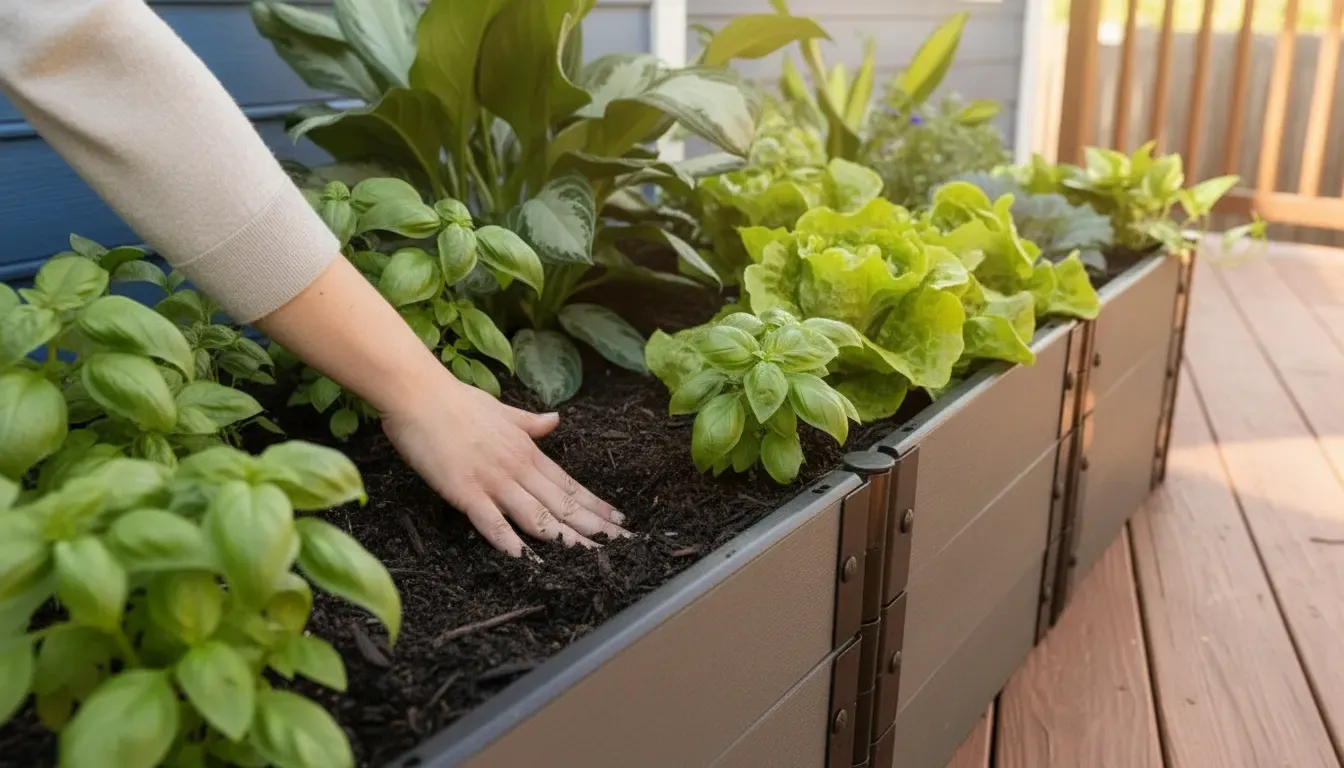
Frame it All raised garden beds are another option when you want the controlled growing environment of a contained bed with more planting area and room to extend the system. Their patented Snap-Lock design is made for tool-free assembly with a mallet or hammer and can be configured as your garden changes.
How should you maintain containers through the seasons?
Short answer: Refresh containers in spring, monitor moisture and harvest through summer, remove spent or diseased growth in fall, and protect or empty vulnerable pots before winter freezes. Seasonal maintenance also means adjusting fertilizer and crop choices as light, temperature, and growth change.
Container maintenance is mostly the habit of checking a small system before a small problem becomes a large one. In spring, refresh tired mix, wash containers, inspect drainage, and start with crops suited to current temperatures. In summer, monitor moisture more often, harvest regularly, and shade heat-sensitive greens during the hottest part of the day if needed.
In fall, remove spent annuals and diseased plant material, harvest remaining crops, and decide which herbs or greens can continue in a protected location. Perennial plants in containers may need extra insulation around the vessel because their roots are more exposed to cold than roots in the ground. In winter, empty containers that could crack when repeatedly frozen and wet, unless the material is rated for those conditions.
Fertilizer needs also change with growth. Follow the product label and the crop's requirements rather than adding more whenever leaves look pale. Yellow leaves can indicate overwatering, poor drainage, nutrient shortage, or natural aging, so check the root zone and recent weather before choosing a fix.
What are the most common container gardening problems?
Short answer: Diagnose a struggling container by checking the root-zone moisture, drainage, light, root space, and airflow together. Wilting, yellow leaves, weak growth, and poor fruiting can share several causes. Correct the growing conditions first, then consider feeding or pest control if the symptoms remain.
Most container failures are traceable to a mismatch between the crop and its growing conditions. Diagnose the root zone, light, and watering pattern together instead of treating every symptom with more fertilizer or more water.
- Plants wilt even after watering: Check whether water is running down the sides of a dry root ball, whether the container is root-bound, or whether roots are sitting in water. Rehydrate slowly and correct the underlying drainage or container-size issue.
- Leaves turn yellow: Feel the mix before watering again. Saturated media and blocked drainage can starve roots of oxygen, while old lower leaves may simply be finishing their life cycle.
- Plants grow tall and weak: Move them closer to the needed light, rotate the container if appropriate, and add support. Too much fertilizer can also produce soft, leafy growth.
- Flowers appear but fruit does not: Check light, heat, watering consistency, and pollination conditions. Avoid moving a fruiting plant repeatedly once it has begun flowering.
- Water runs straight through: The mix may be hydrophobic after drying, compacted, or displaced from the sides. Water in several slow passes and replace exhausted mix at the next planting.
- Pests keep returning: Inspect the undersides of leaves, remove damaged growth, improve airflow, and use a crop-appropriate control. Physical barriers can be more practical than repeatedly treating a vulnerable container.
Find a Frame it All self-watering planter to make daily container care easier.
FAQs: Container Gardening
Can you use regular garden soil in containers?
Garden soil is usually too dense for a pot when used by itself. Choose a potting mix made for containers so roots have air space and water can drain. If you reuse mix, refresh it and check that it has not compacted or accumulated salts.
How often should you water a container garden?
Water when the root-zone mix has begun to dry, not on a fixed schedule. Small pots, fabric pots, hot weather, wind, and large leafy plants can all increase demand. Water thoroughly until drainage begins, then check the container again as conditions change.
What is the 70/30 rule in gardening?
The 70/30 rule is a general way some gardeners describe a mix made mostly of growing medium with a smaller portion of compost or another amendment. It is not a universal formula. Use a container mix and follow the label for the crop and product instead of treating the ratio as a requirement.
What is the most common mistake with container plants?
Overwatering is one of the most common mistakes, especially when a container has poor drainage or the gardener follows a calendar instead of checking the soil. Make sure excess water can escape, then adjust frequency for the plant, pot size, light, temperature, and weather.
Can vegetables and herbs grow together in one container?
Yes, when they have compatible needs and enough room. Pair plants with similar light, moisture, and feeding requirements, such as basil with a tomato in a large container. Avoid crowding fast-growing crops because limited airflow and root space increase stress.
When should you move a container garden indoors?
Move tender plants before the first frost or before a forecast of damaging cold, using the crop's temperature tolerance as the guide. Inspect for pests first, acclimate plants to lower indoor light, and place them where air can circulate.
For more help deciding between a portable container setup and a larger contained garden, compare self-watering planters and raised garden beds. If your space is a patio, the separate patio vegetable garden layout guide covers arrangement ideas, while this guide stays focused on the complete container-growing system.