

When homeowners search for fencing that won't warp, they are usually trying to avoid bowed boards, twisted panels, and repeated repair work. A fence can look perfectly straight on installation day and begin to bow, twist, cup, or separate after repeated wet and dry weather. Material movement, sun exposure, drainage, support, and fastening all influence the result.
Explore Cap Composite fencing for a durable, low-maintenance option.
Fencing That Won't Warp: Materials, Design, and Installation
Why Do Fences Warp?
Fences warp when boards or panels respond unevenly to moisture, heat, sunlight, structural stress, or poor installation. Wood is especially prone to movement because it absorbs and releases moisture. A capped composite system can reduce common moisture and UV concerns, but straight posts, drainage, spacing, and correct fastening still determine how well any fence performs.
Warping is a change in shape rather than a single defect. A board may bow across its length, cup across its width, twist along its grain, or pull away from a rail. These changes can create privacy gaps, interfere with gates, and loosen fasteners. A durable material helps, but the finished fence is a system. Posts, rails, infill, fasteners, and surrounding soil all contribute to long-term alignment.
Moisture cycling makes wood move
Wood is hygroscopic, which means it exchanges moisture with the surrounding air. Temperature and relative humidity affect whether a board gains or loses moisture. The USDA Forest Products Laboratory wood handbook chapter on moisture relations explains this relationship. As moisture changes, wood expands and contracts. The movement is not always equal across a board, so internal stress can gradually produce a bow, cup, or twist.
One face may receive direct sun while the other stays shaded against a rail. End grain can absorb or release moisture faster than the center of a board. A lower edge may remain near damp soil while the upper edge dries quickly. Repeated cycles magnify small changes over time.
Heat and sunlight increase uneven exposure
Heat speeds drying on exposed surfaces. Dark finishes, afternoon sun, and limited airflow can create a different environment on the front of a fence than on the back. Coatings can slow moisture exchange, but they do not make wood dimensionally inert. Cedar may be more stable than some lumber choices, yet it remains an organic material that can move outdoors.
Decay weakens boards and fasteners
When a board stays damp, decay can make movement worse. Softened wood may no longer hold screws securely, and weakened edges can split around fasteners. Clemson Cooperative Extension explains how treated wood breaks down in the landscape, even though treatment can provide useful protection. A low-maintenance fence should address exposure, drainage, and material durability together.
How Does Installation Affect Fence Warping?
Installation affects warping by controlling whether water drains, posts stay aligned, boards have the required movement room, and fasteners apply even pressure. A durable panel can still look uneven when posts lean or the fence traps moisture. Follow the selected system's spacing and fastening instructions instead of adapting dimensions from a different material.
Installation cannot remove the natural behavior of a material, but it can prevent unnecessary stress. Start with the support structure and site conditions, then install boards or panels according to the manufacturer's instructions.
- Inspect the fence line. Identify slopes, low spots, irrigation spray, runoff, tree roots, shifting soil, and areas where mulch or leaves may collect. Plan a route that does not trap water against the lower portion of the fence.
- Set and brace posts correctly. Posts should be plumb, adequately supported, and spaced for the selected system. Check alignment in both directions before adding rails or infill. A panel cannot compensate for a post that leans or moves.
- Plan spacing before fastening. Use the gap, expansion allowance, and support pattern specified for the material. Do not force a board into a space that is too tight or leave a long span unsupported because the layout looks convenient.
- Keep the bottom clear. Avoid persistent contact with wet soil, standing water, leaves, and mulch. Give water a path away from posts and panels. Airflow around exposed surfaces also helps them dry after rain.
- Use the correct hardware. For wood, pre-drilling and positioning screws away from board edges can reduce splitting. For composite, use the fasteners and placement specified for that system. Over-tightening can distort a board or restrict movement.
- Inspect each section as it is built. Compare boards with a string line or level before moving to the next section. Correct a developing bow early rather than relying on later fasteners to pull it flat.
Horizontal fences deserve particular care because long boards make small changes more visible. Rails need consistent support, and the design should not create pockets where water remains against the infill. If the system includes pre-assembled panels or modular brackets, follow its assembly sequence rather than mixing parts from another fence.
Browse durable composite fence options from Frame It All.
Which Materials Make Fencing That Won't Warp More Achievable?
No fence material is immune to every structural problem, but some choices reduce the moisture-related movement associated with traditional lumber. Wood and treated wood require realistic maintenance expectations. Metal resists wood-style rot and warping, while capped composite adds a wood-inspired appearance with a protective shell designed to shield the core from moisture and UV degradation.
Compare materials by exposure, appearance, maintenance, installation method, and warranty. The right choice depends on the site and system details, not on a promise that any fence can never move.
| Material | Movement and exposure | Maintenance considerations |
|---|---|---|
| Wood | Absorbs and releases moisture, so bowing, cupping, twisting, and decay remain ongoing concerns. | Natural appearance, but requires inspection and periodic maintenance. |
| Treated wood | Still exchanges moisture and can eventually decay outdoors. | Familiar and widely available, but treatment does not remove upkeep. |
| Cedar | Can be more stable than some lumber, but remains vulnerable to outdoor moisture movement. | Warm appearance with continued care and realistic durability expectations. |
| Aluminum or steel | Resists common wood-related rot and warping, with performance determined by the frame, finish, and installation. | Low routine maintenance, though the appearance may not suit every project. |
| Uncapped composite | Can reduce common wood concerns, but exposed edges and the specific core design still matter. | Usually lower maintenance than wood. Review system requirements and warranty. |
| Capped composite | A protective outer shell is designed to shield the core from moisture and UV degradation. | Wood-inspired appearance with less routine staining, sealing, or painting. Review the product warranty. |
Metal can be practical when a project prioritizes a highly moisture-resistant structure. Composite can be a better fit when a homeowner or contractor wants a warmer, wood-like appearance and reduced routine maintenance. In either case, inspect the complete system rather than comparing one board in isolation.
For a deeper look at how composite systems compare with wood over time, read Frame It All's composite fence panels versus wood comparison. For project planning, the composite fence cost guide explains which project variables affect the final investment without treating an unsourced figure as a quote.
How Does Capped Composite Protect Against Moisture and UV Damage?
Frame It All Cap Composite uses 360-degree cap coverage to fully encapsulate its composite core in a protective shell. The cap is intended to help shield the board from moisture intrusion and UV degradation. This can reduce material-level exposure compared with exposed wood, while sound posts, drainage, spacing, and installation remain essential to the finished fence.
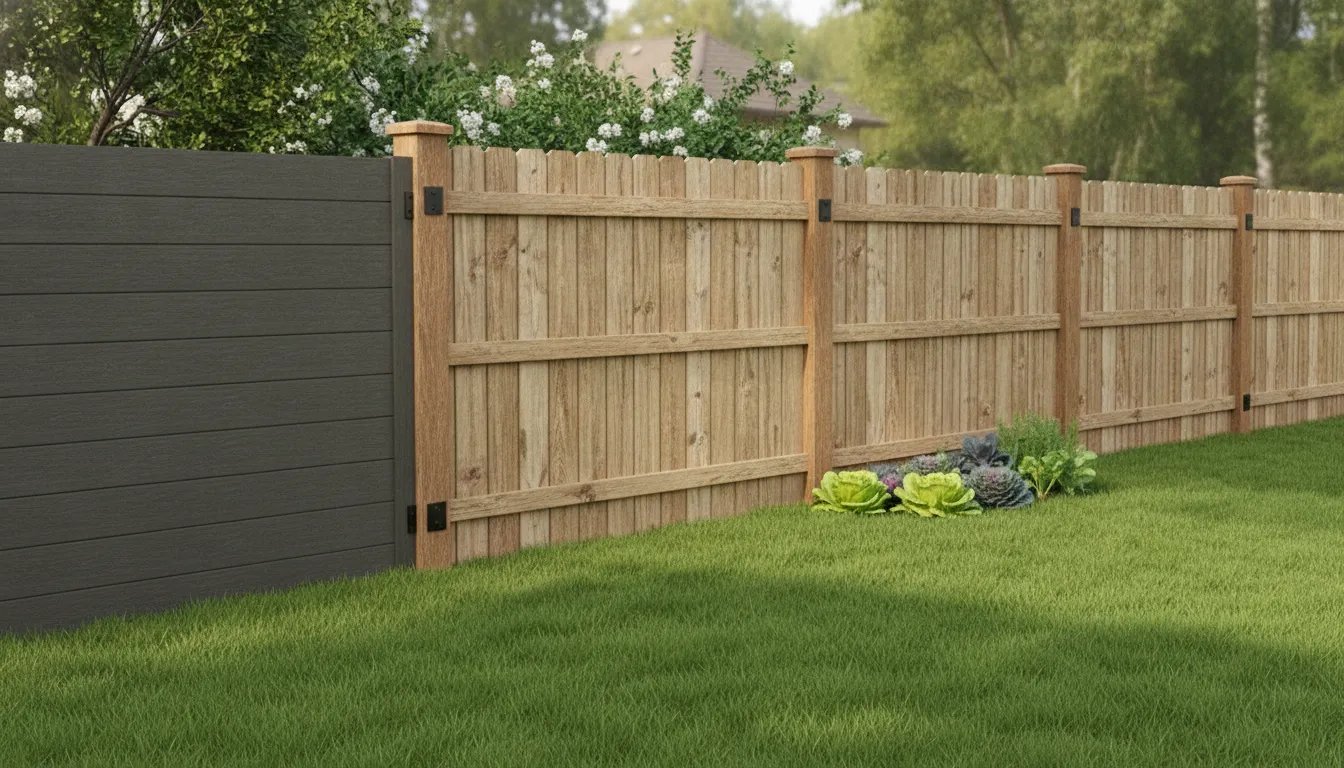
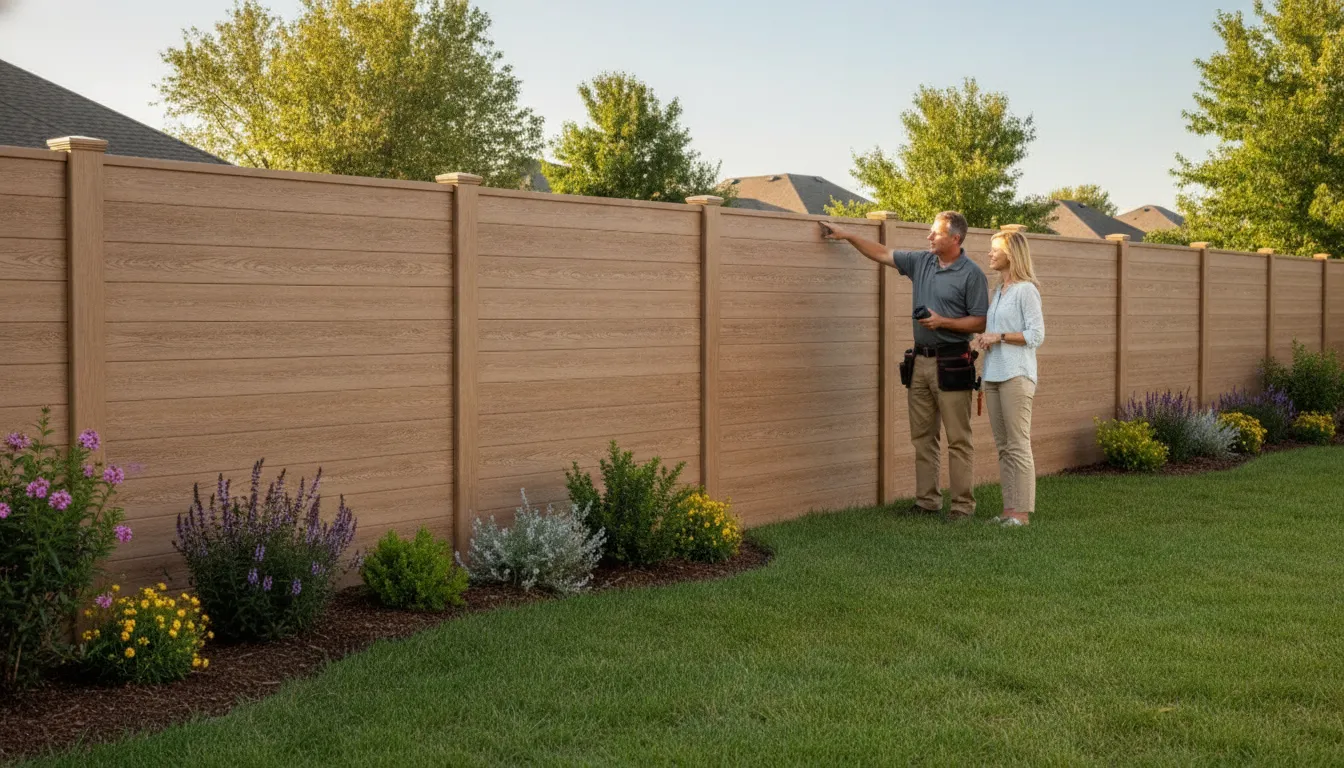
Cap Composite combines a protective exterior with a wood-inspired surface. The 360-degree cap surrounds the core rather than covering only the visible face, which helps address exposure on edges and other surfaces that can be vulnerable outdoors. UV and moisture protection matter because weather-related movement often starts with uneven exposure.
Less routine maintenance than exposed wood
The practical benefit is not only appearance. A capped composite surface is designed to reduce the routine staining, sealing, and painting associated with exposed wood products. Homeowners can focus on checking posts, cleaning the fence when needed, and keeping drainage clear rather than planning regular refinishing as the primary protection strategy.
Long-term protection with a clear warranty
Frame It All Cap Composite fencing carries a 30-year warranty. A warranty does not make a fence immune to poor drainage, shifting soil, impact, unsupported spans, or incorrect installation. It does communicate that the material is intended for long-term outdoor use. Buyers and contractors should review the applicable terms before making a project-specific promise.
The material composition also supports Frame It All's sustainability positioning. The Cap Composite core uses 38% recycled plastic and 62% sustainable hardwood fibers, according to the company's product information. That combination provides a wood-inspired look while using recycled and renewable material inputs. Evaluate the product as a complete fence system, including posts, rails, fasteners, and site preparation.
Is Composite Fencing a Good Fit for Homeowners and Contractors?
Composite fencing can suit homeowners who want a wood-like appearance with less routine maintenance and contractors who need a repeatable material option for long-term projects. It is most effective when the crew plans posts, drainage, support, and hardware before assembly. Frame It All's Snap-Lock system is designed for tool-free assembly, but site conditions still affect labor and results.
What homeowners should evaluate
Homeowners should begin with the site, not only the color or finish. Confirm property lines, local requirements, fence height, post locations, ground conditions, and drainage. Consider where irrigation, roof runoff, or low spots could keep the fence wet. A durable board will perform better when the surrounding installation does not hold water against it.
Cap Composite can be useful when a homeowner wants a wood-inspired fence without the same routine refinishing associated with exposed lumber. The 360-degree cap helps protect the core from moisture and UV degradation, and the 30-year warranty provides a defined durability position. Follow product instructions closely, especially for support, spacing, and hardware.
What contractors should evaluate
Contractors should evaluate the complete workflow. Review how the material is delivered, how panels or boards are handled, which tools and fasteners are required, and how the system fits the crew's normal post preparation. Frame It All's patented Snap-Lock assembly is designed to reduce hardware-intensive work. Actual labor depends on access, terrain, layout, crew experience, and site condition.
Contractors should also explain maintenance and warranty terms precisely. Lower maintenance is a benefit, but it is not a guarantee of zero care. Make clear which installation conditions are required and avoid promising that any material will remain unaffected by every structural force. Accurate expectations protect the homeowner and the contractor's reputation.
See Frame It All fence panel options for your project.
Contractors evaluating a longer-term composite option can also review the Cap Composite guide for homeowners and fence installers, which explains the product's intended use and audience.
What Should You Check Before Buying Fencing That Won't Warp?
Before buying fencing that won't warp, check the material's moisture protection, UV resistance, support requirements, movement allowance, drainage plan, fastening method, and warranty. Then compare those specifications with the actual fence site. A careful material and installation decision is more reliable than choosing a product based on a broad promise of permanent straightness.
- Define the exposure. Note direct sun, prevailing rain, irrigation, runoff, standing water, and contact with soil. Match the material and protective surface to those conditions.
- Compare the complete system. Review posts, rails, infill, brackets, fasteners, caps, and support spacing. A strong board cannot correct a weak or misaligned frame.
- Confirm movement allowances. Ask how the system handles expansion, contraction, edge spacing, and long runs. Use the manufacturer's measurements rather than copying a wood-fence layout.
- Plan drainage. Keep water moving away from posts and panels. Do not bury or surround components with material that stays wet.
- Review the warranty. Read what is covered, what installation conditions apply, and what maintenance is expected. For Frame It All Cap Composite, the stated fencing warranty is 30 years.
- Choose the right installation path. Decide whether the project is a DIY build or a contractor installation. Account for post work, access, tools, handling, and site preparation instead of estimating labor from board assembly alone.
When the priority is a straighter fence with less recurring maintenance, capped composite is worth comparing with wood, treated wood, cedar, and metal. The best result comes from pairing the material's protective properties with careful design and installation.
Compare Frame It All's Cap Composite fencing system.
Frequently Asked Questions
What is the best fencing that won't warp?
The best option depends on the site, but capped composite is a strong low-maintenance choice when moisture and UV exposure are key concerns. Its protective outer shell is designed to shield the core, while correct posts, spacing, drainage, and fastening remain necessary for a straight installation.
Does composite fencing warp in the sun?
Composite fencing can experience movement if the system is poorly supported or installed incorrectly. A capped composite surface is designed to help protect the core from UV degradation and moisture exposure. Follow the manufacturer's spacing and support instructions for the selected system.
Is treated wood fencing resistant to warping?
Treated wood can provide useful protection against some forms of deterioration, but it remains wood. It still exchanges moisture with the surrounding air and can move, split, or decay outdoors. Drainage, spacing, maintenance, and installation quality all affect its performance.
What causes a horizontal fence to warp?
Common causes include uneven moisture absorption, direct sun, heat, unsupported spans, leaning posts, tight spacing, incorrect fasteners, and water trapped near the lower boards. Horizontal layouts make movement easier to see, so consistent support and material-specific installation are especially important.
How long does capped composite fencing last?
Frame It All Cap Composite fencing carries a 30-year warranty. The actual result depends on the product terms, site conditions, support structure, drainage, and installation. Review the warranty and installation requirements before planning a specific project.