

Old-style wood fencing needs hours of sanding and staining every other summer. This constant work is a major burden. Choosing the right fence material can save you years of effort and costly repairs.
Composite fence panels are high-performance building materials made from recycled plastic and wood fibers, engineered to resist rot, warping, and pests without regular maintenance. They deliver the natural look of wood without the yearly painting or sealing. The patented Snap-Lock system enables tool-free assembly, saving both labor and time. Backed by warranties up to 30 years, these panels outperform wood in both durability and long-term value for homeowners and contractors alike.
Ready to upgrade your fence without the constant upkeep? Request a free composite fencing sample and quote from Frame It All today.
Choosing between composite fence panels and traditional wood means understanding how each material performs over time. This guide breaks down every factor that matters , maintenance, lifespan, cost, installation, and long-term value , so you can make the right decision for your property.
What Makes Composite Fence Panels Different?
Composite fence panels combine wood fibers with plastic polymers to create a material that outperforms natural wood on nearly every measurable metric. They resist moisture, UV damage, and insect infestations while requiring no staining, sealing, or painting. The patented Snap-Lock system from Frame It All allows tool-free assembly that cuts installation time in half.
How composite boards are made
Manufacturers heat wood dust and recycled plastic until they fuse into a dense, waterproof board. Because the plastic encapsulates the wood fibers, the resulting material resists water absorption and fungal decay far better than solid lumber. The National Institutes of Health confirms that wood-plastic composites offer significantly higher biological durability than natural wood in wet conditions.
Most composite boards include UV stabilizers that prevent fading, so the color stays consistent for years without paint or stain. The material is solid all the way through , no hollow cores, no veneers that can peel. This means the fence maintains its appearance for decades, not just a few seasons.
Frame It All Cap Composite: a cut above
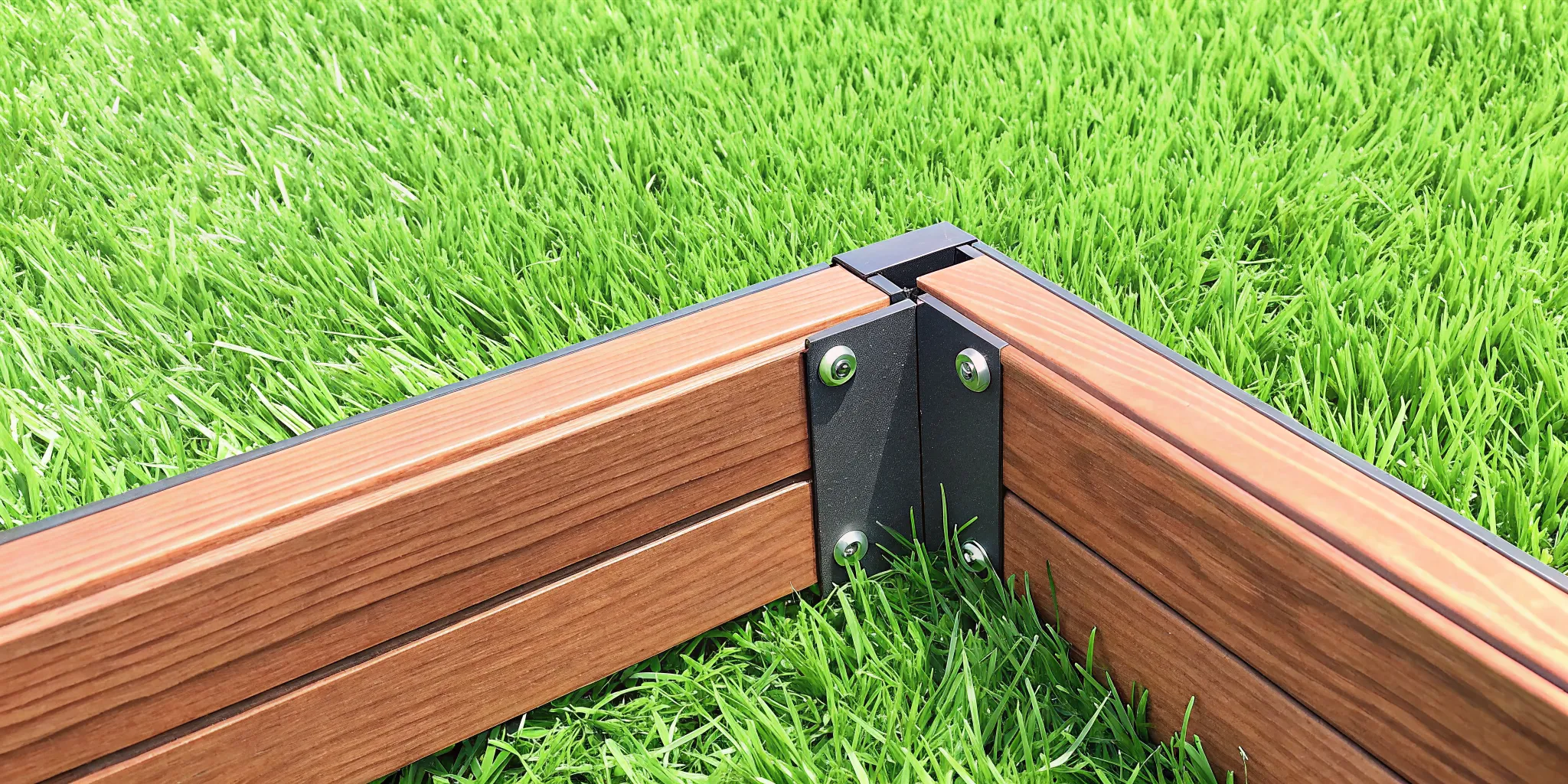
Frame It All uses Cap Composite for its fencing line. These boards feature a dense outer cap that resists scratches, stains, and moisture penetration. The shell mimics the grain and warmth of real wood while eliminating the weaknesses that cause natural lumber to crack. Split, or cup after a single season of weather exposure.
The modular design works with the Snap-Lock system, which lets you snap sections together without tools. This reduces installation time dramatically. For contractors, that means faster job completion and fewer callbacks. For homeowners, it means completing a weekend project without renting specialized equipment.
See how Cap Composite fencing transforms your yard. Explore pre-assembled composite fence panels from Frame It All.
Wood Fence Panels: The Traditional Option
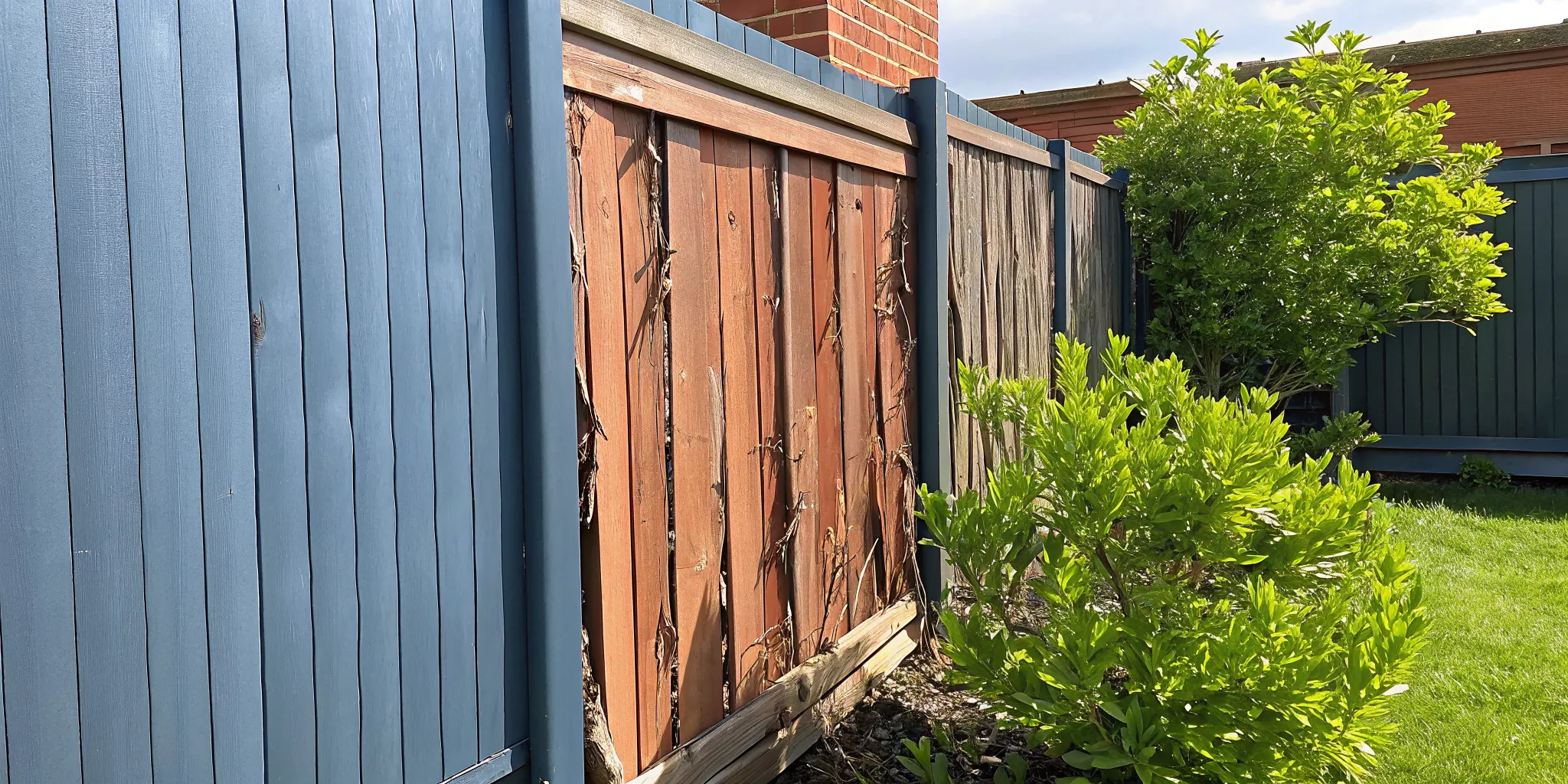
Wood fence panels cost less upfront than composite alternatives and offer a classic natural appearance. However, wood requires regular staining or sealing every 2-3 years, is prone to rot and pest damage, and typically lasts only 5-15 years before needing replacement. The long-term maintenance costs often exceed the initial savings.
Lower upfront cost, higher lifetime expense
A wood fence can look attractive on installation day. Cedar and pressure-treated pine are widely available at competitive price points. But that initial affordability masks a costly reality: ongoing maintenance expenses add up fast. A typical wood fence needs a new coat of stain or paint every 2-3 years, costing hundreds of dollars and a full weekend of labor each time.
The constant cycle of wood fence maintenance
Wood is a natural material that reacts to weather. Without regular sealing, boards absorb moisture from rain and snow, causing them to swell, shrink, and eventually crack. Unlike composite fence panels, which require no sealing, wood boards demand attention every season or they begin to deteriorate visibly.
- Staining and sealing: Required every 2-3 years at $200-$400 per application
- Rot repair: Affected boards must be cut out and replaced individually
- Pest damage: Termites and carpenter bees target untreated wood
- Warping and cracking: Temperature swings cause wood to expand and contract
- Full replacement: Most wood fences last only 5-15 years before major replacement is needed
Decay, pests, and hidden costs
Moisture is the primary threat to a wood fence. When wood stays damp, fungal decay sets in, softening the boards and compromising structural integrity. Insects like termites and wood-boring bees accelerate the damage. The NIH confirms that solid wood has significantly less resistance to decay than composite alternatives.
The environmental cost matters too. Wood fencing requires cutting new trees, and the chemical sealants used to protect it can leach into surrounding soil. When a wood fence fails after a decade, the old materials often end up in a landfill. Composite panels, by contrast, use recycled materials and last two to three times longer.
Composite Fence Panels vs Wood: Head-to-Head Comparison
When comparing composite vs wood fence panels, the key differences come down to maintenance requirements, lifespan, and total cost of ownership. Composite panels last 25-30 years with minimal care, while wood lasts 5-15 years with substantial ongoing maintenance. Composite has a higher upfront price but lower lifetime cost.
| Factor | Traditional Wood | Composite Panels |
|---|---|---|
| Maintenance | Staining and sealing every 2-3 years | Soap and water cleaning only |
| Lifespan | 5 to 15 years on average | 25 to 30 years under warranty |
| Rot resistance | Prone to fungal decay in damp conditions | Engineered to resist moisture and rot |
| Pest resistance | Attracts termites and wood-boring insects | Inedible to pests, no chemical treatment needed |
| Color retention | Fades and grays rapidly without stain | UV-stabilized, minimal fading over time |
| Environmental impact | Uses virgin lumber, chemical sealants required | Made from 95% recycled materials |
| Total cost over 30 years | $8,000-$15,000 including maintenance | $5,000-$9,000 installed, near-zero upkeep |
The numbers tell a clear story. Wood's lower entry price is deceptive once you factor in a decade of staining, sealing, repairs, and eventual replacement. Composite panels require a larger initial investment but deliver substantial savings over the full life of the fence.
Are Composite Fence Panels Worth the Investment?
Composite fence panels cost more upfront but deliver superior value over time through zero maintenance, longer lifespan, and higher property value. Frame It All backs its composite fencing with a 30-year warranty, while wood fences typically fail within 5-15 years and require thousands in ongoing upkeep.
Long-term savings that add up
A wood fence may appear cheaper at purchase, but the total cost over 30 years tells a different story. Each staining cycle costs $200-$400 in materials alone. Two full replacements over three decades add thousands more. Frame It All provides a 30-year warranty on its fencing products , besting competitors like Trex (25 years) and WoodPlank (20 years) according to industry standards.
Because composite materials resist moisture and decay, you never have to buy stain, sealant, or replacement boards. The NIH research confirms that composite materials maintain their structural integrity far longer than solid wood in outdoor conditions.
Built for extreme weather
High-end composite panels handle conditions that destroy wood fencing. Some composite fence kits are tested to withstand wind speeds up to 100 mph. They do not warp in summer heat, crack in winter cold, or absorb moisture during spring rains. For homeowners in storm-prone regions, this reliability is a critical advantage.
The modular design also allows greater flexibility. You can stack composite fence panels to reach heights up to 12 feet for privacy and sound blocking. Wood at that height would require extensive reinforcement and still risk warping over time.
Consistent quality, fewer callbacks
Natural wood contains knots, grain variations, and hidden defects that cause problems down the line. Composite boards offer uniform density, color, and structural consistency across every piece. For contractors, this translates to faster installations, less waste, and virtually no callbacks. Using pre-assembled composite fence panels simplifies the process further for both pros and DIY enthusiasts.
Choosing composite fencing is not just about buying a fence. It is about buying peace of mind that the structure will look great and perform reliably for decades. Read more about the benefits of pre-assembled composite fencing from Frame It All.
Make the switch to maintenance-free fencing. Get a free quote for Frame It All composite fence panels today.
Installation: Composite vs Wood Fence Panels
Composite fence panels install faster and more consistently than wood thanks to modular snap-together designs and uniform board dimensions. The Snap-Lock system from Frame It All eliminates the need for power tools and individual board alignment, reducing a 3-day wood fence project to a single weekend.
Speed and ease of assembly
Modern composite systems prioritize speed. Frame It Alls patented Snap-Lock design lets you connect panels without tools, using interlocking channels that self-align. Wood fencing requires measuring, cutting, leveling, and nailing each picket individually , a process that introduces variability and errors at every step.
Step-by-step: composite fence installation
- Set the posts. Both systems require sturdy posts. Composite kits pair well with aluminum posts that resist corrosion and stay straight for decades.
- Attach the rails. Aluminum top and bottom rails create the frame. These slide into the posts with integrated brackets , no measuring required.
- Snap in the panels. The Snap-Lock system allows each panel to click into place. Uniform dimensions mean every panel fits without adjustment.
- Install the caps. Post caps and trim pieces snap on for a finished look. No painting, no caulking, no sealing.
- Clean up. Hose off any dust and enjoy your new fence. No stain fumes, no sawdust, no waiting for paint to dry.
Standard tool list comparison
| Task | Wood Fence | Composite Fence |
|---|---|---|
| Cutting | Circular saw for every board | Minimal or no cutting needed |
| Fastening | Nail gun or hammer + nails | Snap-together joints, no fasteners |
| Leveling | Level each picket individually | Self-aligning channels |
| Finishing | Stain, seal, or paint | No finishing required |
| Estimated time (100 ft) | 3-5 days with 2 workers | 1-2 days with 2 workers |
The time savings are substantial. A wood fence project that consumes an entire weekend plus weekday evenings can be completed in a single full day with composite panels. For professional installers, that means more jobs per crew per month.
Frequently Asked Questions
How long do composite fence panels last?
Composite fence panels typically last 20 to 30 years, which is two to three times longer than wood. The boards resist rot, decay, and pest damage while maintaining structural integrity through temperature swings and moisture exposure. Most premium brands, including Frame It All, back their products with 25 to 30-year warranties.
Are composite fence panels more expensive than wood?
Composite fence panels cost more upfront than wood. But the total cost of ownership over 30 years is lower because they require no staining, sealing, painting, or periodic replacement. Wood fences need a full replacement every 5 to 15 years plus recurring maintenance that adds thousands in materials and labor.
What are the downsides of composite fencing?
The main downside is the higher initial investment compared to standard wood panels. Some composite systems require specific post types that may cost more than standard lumber. While the texture and appearance closely resemble wood, some homeowners prefer the feel of natural grain. Always verify local building codes before selecting a fence material.
Do composite fence panels fade in the sun?
Modern composite panels include UV stabilizers that prevent significant fading. While a very slight color shift may occur over many years, it is typically uniform and barely noticeable. Unlike wood, which turns gray and requires restaining, composite boards hold their color through seasons of direct sun exposure.
Are composite fence panels worth the investment?
For most homeowners, composite fence panels are worth the investment because they eliminate ongoing maintenance, resist common fence failures, and last 20 to 30 years. The 30-year warranty from Frame It All provides additional peace of mind. Composite fencing also adds resale value by offering durable, low-maintenance curb appeal.
Upgrade to Composite Fence Panels That Last
A new fence is a long-term investment in your property. Wood delivers a familiar look but demands constant labor and expensive upkeep. Composite fence panels give you the appearance of natural wood without the maintenance burden, backed by warranties that exceed anything the lumber industry offers.
Frame It All Cap Composite fencing combines the patented Snap-Lock system, recycled materials, and a 30-year warranty into a solution that outperforms wood on every metric that matters. Whether you are a homeowner planning a weekend project or a contractor building for a client, the choice is clear: composite delivers better results with less work.
Ready to stop staining and start enjoying your yard? Request a free composite fencing sample and quote from Frame It All today.