
When you look at a beautifully landscaped yard, what catches your eye first? Often it is the crisp separation between lawn and garden beds. No dig landscape edging makes this look achievable for any homeowner in a single weekend. Unlike traditional methods that require hours of trench digging, no-dig systems sit right on the soil surface. You clear the path, connect the boards, and secure them with anchoring stakes.
The result is a professional, clean border that keeps grass out and mulch in place. Frame It All takes this concept further with patented Snap-Lock technology. Each board connects to the next using brackets that click together with a hammer or mallet. No power tools are needed. No concrete mixing. No complex measuring of trench depths.
The composite material looks like natural wood but will not rot, splinter, or warp like traditional lumber. Each 4-foot board also diverts 97 plastic bottles from landfills, making your garden as sustainable as it is beautiful.
Browse Frame It All landscape edging kits and transform your garden borders this weekend.
The following guide covers everything you need to know, from planning your layout to choosing the right materials and completing a professional installation that lasts. Whether you are a first-time gardener or a seasoned landscaper, these techniques will help you achieve sharp, lasting borders without the back-breaking labor of traditional edging.
What Is No Dig Landscape Edging and How Does It Work?
No dig landscape edging is a border system that sits on top of the soil rather than inside a trench. It uses interlocking boards or strips held in place by anchor stakes driven into the ground. The key advantage is simple: you skip the digging entirely. This makes it an accessible option for homeowners who want professional-looking borders without heavy equipment or hours of labor.
Frame It All's no-dig system uses composite boards made from recycled HDPE plastic and sustainably sourced wood fiber. Each board connects with Snap-Lock brackets that click together and secure with a rubber mallet. The boards rest on cleared, level soil, and anchor stakes through the bracket slots hold everything in place. You can install a 16-foot border in under two hours with no tools beyond a mallet and a tape measure.
Why No Dig Edging Creates the Cleanest Garden Borders
Every gardener wants sharp lines between their lawn and flower beds. Standard digging often leaves messy dirt piles and uneven edges. Choosing no dig landscape edging helps you create professional borders without the sweat. These systems sit on top of the soil instead of in a deep trench. This keeps your grass intact and ensures your garden lines stay crisp all year.
Save time and protect your back
Traditional garden borders require digging a trench, moving soil, and leveling a base. This takes hours and strains your back. A no-dig system eliminates those steps entirely. You simply clear the path, set the boards along your layout line, and secure them with stakes. Most homeowners complete a full garden border in a single afternoon.
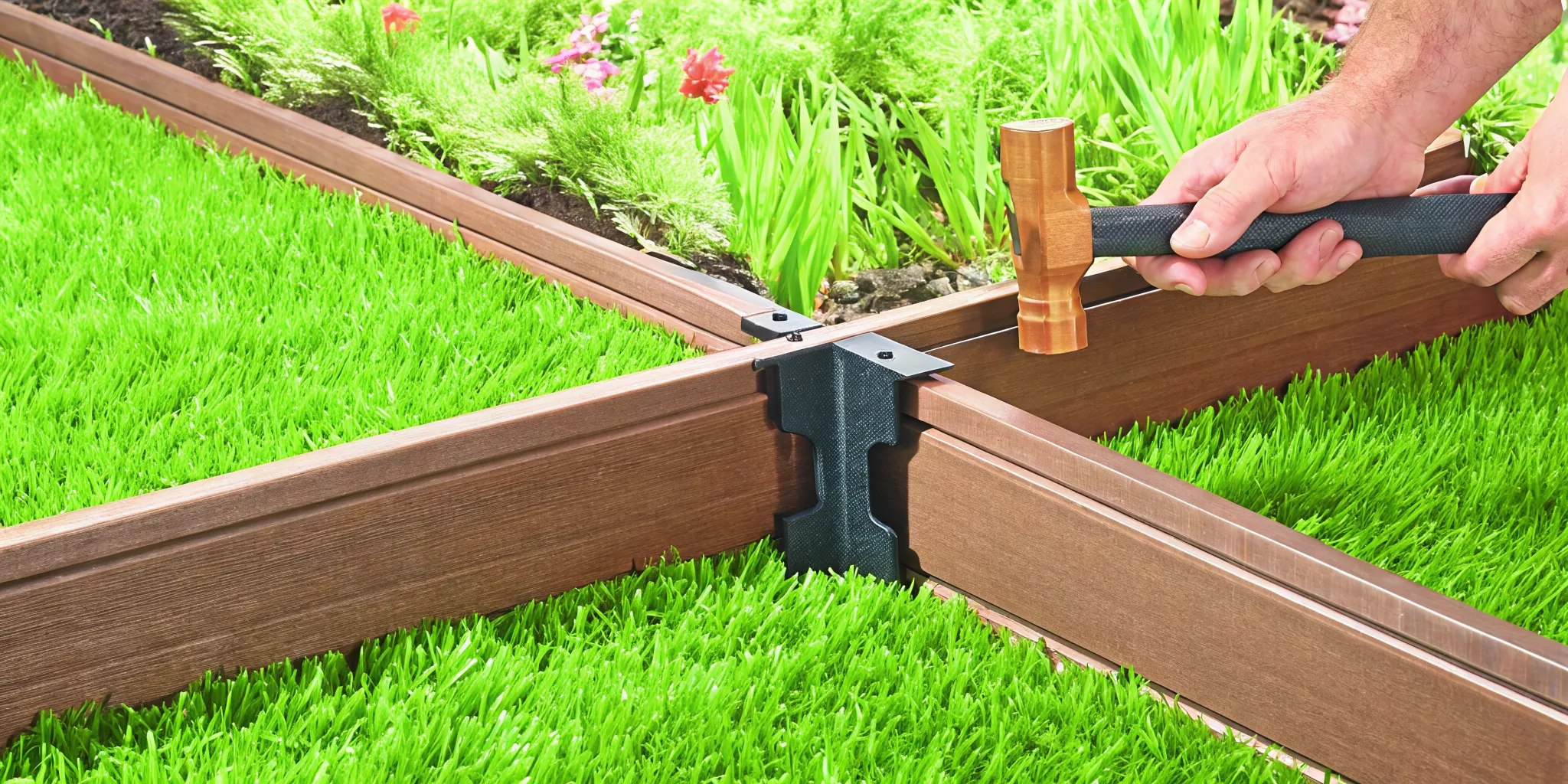
Frame It All's Snap-Lock system makes the process even faster. The brackets join boards without power tools or hardware. A rubber mallet is all you need to tap the brackets into place and drive the anchor stakes. This tool-free approach delivers a clean look without the physical toll of a major landscaping project. For more details, see our guide to composite landscape edging.
Durable materials for lasting clean lines
The best garden borders maintain their appearance for years. Thin plastic strips warp or crack within one to three years of sun exposure. Frame It All uses composite boards made from recycled plastic and wood fiber. These boards resist rot, UV damage, and impact. They maintain the appearance of natural wood without staining, sealing, or periodic replacement. Each 4-foot board diverts 97 plastic bottles from landfills.
Composite edging forms a rigid wall that holds its shape against soil pressure and root growth. Thin plastic strips sag and shift, but composite boards stay straight. The solid barrier prevents grass from creeping into garden beds and keeps mulch contained. Products meeting environmental standards from the Environmental Protection Agency offer additional assurance of responsible material sourcing.
No Dig Landscape Edging vs Plastic: Which Material Performs Better?
Choosing the right material is the most important decision for any landscape edging project. Many homeowners start with basic plastic edging because of the lower upfront cost. But the differences in durability, appearance, and long-term value are substantial. Understanding these trade-offs helps you make a choice you will be satisfied with years from now.
Here is what separates composite from plastic edging at a glance:
| Feature | Frame It All Composite | Standard Plastic Edging |
|---|---|---|
| Material composition | Recycled HDPE plastic and FSC-certified wood fiber. | Virgin or recycled LDPE/HDPE plastic strips. |
| Lifespan | Limited lifetime warranty, up to 10 years. | 1 to 3 years before brittleness and cracking. |
| Weather resistance | Resists rot, UV damage, warping, and frost heave. | Becomes brittle in sun, softens in heat, snaps in cold. |
| Maintenance | None required. | Frequent replacement of broken sections. |
| Installation | Tool-free Snap-Lock system, rubber mallet only. | Basic stake-and-connect, but thin material often pulls loose. |
| 16-ft kit price | $84.99 (straight) or $94.99 (curved). | $20 to $40 for 50 feet. |
| 5-year total cost | $84.99 (one-time purchase). | $60 to $120 (2-3 replacements). |
| Environmental impact | Each 4-ft board diverts 97 plastic bottles from landfills. | Depends on virgin vs recycled content. |
Strength and lifespan
Composite boards use a dense blend of recycled HDPE plastic and wood fiber. This creates a rigid board that resists ground pressure, root growth, and seasonal freeze-thaw cycles. Standard plastic edging is thin and flexible by design, which makes it prone to warping, cracking, and pulling loose from its stakes. In cold winters, plastic can snap when the ground shifts. In hot summers, it can sag and lose its shape.
Frame It All composite kits come with a limited lifetime warranty covering up to 10 years of use. The 360 Cap Composite coating wraps each board in a protective layer that blocks moisture absorption and UV damage. This prevents the fading, rotting, and splintering that affect natural wood and basic plastic alike.
Environmental value and total cost of ownership
Composite edging provides clear environmental advantages. Every 4-foot board uses 97 recycled plastic bottles that would otherwise end up in landfills. The HDPE plastic and FSC-certified wood fibers come from responsibly managed sources. This makes composite an eco-conscious choice compared to virgin-plastic edging strips.
A 16-foot Straight Landscape Edging Kit costs $84.99, which is more than a basic plastic kit at first glance. But the total cost over five years tells a different story. Plastic edging typically needs replacement every one to three years, adding up to $60 to $120 over that period. Composite edging remains in place with no maintenance and no replacement costs. The Snap-Lock system saves hours of installation time compared to trench-based methods. You only need a rubber mallet to connect the boards and drive the stakes.
How to Install No Dig Landscape Edging Step by Step
Once you have selected your Frame It All landscape edging kit and planned your layout, installation moves quickly. The Snap-Lock tool-free system lets you complete the project with just a rubber mallet.
- Clear and prepare the installation area by removing grass and debris.
- Lay out the composite boards end to end along your border line.
- Connect boards with Snap-Lock brackets tapped into place.
- Secure the edging with anchor stakes every 2 to 3 feet.
- Stack boards for deeper borders if desired.
- Cover bracket tabs and stake tops with mulch or gravel.
Here is how to install no dig landscape edging for a professional finish.
Step 1: Clear and prepare the installation area
Start by removing grass, weeds, loose soil, and debris from the border path. The edging must sit on firm, level soil to stay straight over time. Do not install directly on top of mulch, pebbles, or thick grass, as these soft surfaces can cause the boards to shift. Use a garden hose or string line to mark the edge of your planned border, then clear a strip roughly 6 to 8 inches wide along that line.
For best results, compact the soil lightly before placing the boards. This helps the anchor stakes grip firmly and reduces the chances of frost heave pushing the edging up during winter months. A few minutes of preparation now saves hours of adjustments later.
Step 2: Lay out the composite boards along your border line
Each kit includes 4 composite boards, 8 snap-lock brackets, 5 anchor stakes, 5 stacking stakes, and 5 finishing caps for every 16 linear feet. Start by placing the boards end to end along your marked line. The boards come in 1-inch or 2-inch profile heights, giving you flexibility in how much border height you want.
For straight borders, simply align each board with the next. For curved sections, use the pivoting brackets that allow smooth bends and custom angles. The boards are flexible enough to create gentle arcs without stress or cracking. If you need to extend beyond a single kit, the modular system lets you connect additional kits seamlessly.
Step 3: Connect boards with Snap-Lock brackets
This is where Frame It All's patented technology shines. Slide a snap-lock bracket over the joint where two boards meet. The bracket clicks into place with pressure from your hand. Once positioned correctly, tap the bracket with a rubber mallet to secure it fully. Repeat at each board joint along your border.
For the Brown Hickory capped composite option, rugged screw-type brackets are used instead. These provide extra holding strength for heavy-duty, long-term performance. The standard Gray Weathered Wood and Classic Sienna finishes use the classic snap-lock brackets that make installation fast and straightforward.
Step 4: Secure the edging with anchor stakes
With all boards connected, anchor the system to the ground. Place anchor stakes through the designated slots on the brackets. Drive each stake into the soil using a rubber mallet. Stop when the top of the stake is flush with the bracket. Do not overdrive the stakes, as too much tension can cause wavy edges.
Space the stakes approximately every 2 to 3 feet along the border. For curved sections, you may need stakes closer together to hold the shape securely. In very loose or sandy soil, using additional stakes helps maintain stability. Anchor stakes pierce through landscape fabric easily, so you can install edging over weed barrier without issues.
Step 5: Stack for deeper borders if desired
One of the unique features of Frame It All landscape edging is the ability to stack boards for a taller border. If you want a deeper bed edge, use the stacking stakes included in the kit to attach a second layer of boards on top of the first. You can stack up to 11 inches high for a more dramatic separation between lawn and garden beds.
For deep mulch beds or areas with aggressive grass, the taller profile provides better containment. The stacking system uses the same tool-free snap-lock approach, so adding height takes only minutes once the base layer is installed.
Step 6: Cover and finish
Once all boards are connected and anchored, cover the bracket tabs and stake tops with mulch, gravel, or soil. This hides the hardware and gives your border a finished, professional look where only the clean composite boards are visible. Rake the ground cover smooth and water lightly to settle everything in place.
The entire process for an average garden border takes 2 to 4 hours. Compare that to a full day of trench digging, and the time savings become clear. Your Frame It All composite landscape edging kit is now installed and ready to keep your garden looking pristine for years.
What Is the Best Material for No Dig Landscape Edging?
Composite edging offers the best balance of durability, aesthetics, and low maintenance for most homeowners. Unlike basic plastic that becomes brittle in one to three years, composite resists rotting, warping, and UV damage. It looks like natural wood without the staining, sealing, or periodic replacement that wood requires.
Frame It All's composite landscape edging uses a blend of recycled HDPE plastic and FSC-certified wood fiber. The 360 Cap Composite coating wraps each board in a protective layer that blocks moisture and UV rays. This prevents fading, rotting, and splintering. For heavy-duty applications where maximum strength matters, the Brown Hickory capped composite option adds extra protection. Basic plastic edging costs less upfront but typically needs replacement every few seasons, making composite the more economical choice over time.
How to Maintain Your No Dig Landscape Borders for Lasting Clean Lines
One of the best benefits of no dig landscape edging is the minimal maintenance required. Composite boards resist rot, UV damage, and impact far better than wood or basic plastic. You do not need to spend weekends painting, staining, or sealing your garden edges. Browse the Frame It All landscape edging collection to find options that fit your yard.
Why composite stays clean with minimal effort
The 360 Cap Composite technology used in Frame It All products creates a sealed outer surface that blocks moisture and pests. This coating provides high UV resistance, preventing the sun from fading the board color. Because the boards do not absorb water, they will not rot, warp, or splinter like natural wood. The result is a garden border that maintains its appearance season after season with no chemical treatments or sealants.
For more details on material performance, see our guide to composite landscape edging. The blend of recycled plastic and wood fiber creates a surface that withstands temperature swings, heavy rain, and snow without degrading.
Quick cleaning for a fresh look
Even low-maintenance edging can collect dust, mud, or grass clippings during the growing season. A quick spray with a garden hose removes most dirt. For tougher spots, a soft brush with mild soap restores the boards to their original appearance. This simple cleaning routine takes about 10 minutes and keeps the sharp, clean lines that make your flower beds stand out.
A border built for long-term performance
Frame It All composite edging kits are engineered to handle extreme weather, from hot summer sun to freezing winter snow. The limited lifetime warranty covers up to 10 years of use, giving you confidence that your no dig landscape edging will stay in place and look great without the constant upkeep required by other materials.
Creative Design Ideas for No Dig Garden Borders
No dig landscape edging works with many different garden layouts and styles. The modular Snap-Lock design lets you create clean lines or soft curves without trenching. Because the boards connect quickly and disconnect just as easily, you can start with a small project and expand over time as your garden grows.
Define flower beds and walkways
Use straight boards to create crisp edges around your main flower beds. This clean border keeps mulch in place and stops grass from creeping into your soil. You can also use no dig landscape edging to line garden paths. By mixing straight and curved sections, you can guide visitors through your yard with a layout that follows the natural contours of your property.
To protect young trees or shrubs, build a ring around their base. This circle keeps lawn mowers away from delicate trunks and creates a tidy space for water and nutrients. Composite boards resist rot and splintering even after years of exposure, making them a safer choice than pressure-treated lumber near edible plants.
Separate garden zones
Many gardeners use these borders to separate vegetable beds from ornamental areas. A raised edge creates clear visual boundaries that help organize different plant types. Since the boards can be moved and reconfigured, you can change the layout between seasons to accommodate crop rotation or new design ideas. This flexibility pairs well with Frame It All raised garden beds for a cohesive outdoor space.
Safe borders for play areas
The same modular boards work well around playgrounds and sandboxes. Playground border kits cost $84.99 to $94.99 and keep wood chips or rubber mulch contained within the play zone. Rounded caps keep edges safe for children and pets. The recycled composite material is splinter-free and chemical-free, making it a smart choice for areas where kids play.
Frequently Asked Questions About No Dig Landscape Edging
Does no dig landscape edging actually work?
Yes, no dig landscape edging works effectively when installed on properly prepared soil. The system uses anchoring stakes driven through bracket tabs into the ground to hold the edging securely. For separating garden beds from lawn, containing mulch, and creating clean borders, no-dig edging performs exceptionally well. Composite options from Frame It All offer better durability than basic plastic because the boards resist UV damage and ground pressure that can cause thinner materials to warp or shift.
What is the best material for no dig landscape edging?
Composite edging offers the best balance of durability, aesthetics, and low maintenance for most homeowners. Unlike basic plastic that becomes brittle in 1 to 3 years, composite resists rotting, warping, and UV damage. It looks like natural wood without the maintenance requirements. For heavy-duty applications where maximum strength is needed, the Brown Hickory capped composite option adds extra protection with a 360-degree coating. Basic plastic is cheaper upfront but often needs replacement within a few seasons.
How do you install landscape edging without digging?
Installation requires no trenching. Clear the soil surface of grass and debris along your border path. Lay the composite boards end to end along the line. Connect boards using snap-lock brackets tapped with a rubber mallet. Drive anchor stakes through the bracket slots into the soil every 2 to 3 feet. Cover the hardware with mulch or gravel for a finished look. Frame It All kits include all components needed for each 16-foot section: 4 boards, 8 brackets, 5 anchor stakes, 5 stacking stakes, and 5 finishing caps.
How long does no dig landscape edging last?
Lifespan depends on the material. Basic plastic edging typically lasts 1 to 3 years before becoming brittle from sun exposure. Composite edging from Frame It All is backed by a limited lifetime warranty of up to 10 years. The composite material resists rotting, splintering, warping, and UV damage, so it maintains its appearance and structural integrity for many seasons with no maintenance required.
Does landscape edging require T-connectors?
Frame It All landscape edging kits do not include or require T-connectors. The modular Snap-Lock system uses straight and pivoting brackets to create both straight runs and curved borders. If you need to branch in different directions, additional kits connect seamlessly using the same bracket system. The kits are designed to work without special junction pieces.
Ready to Upgrade Your Garden Borders?
No dig landscape edging delivers professional-looking garden borders in a fraction of the time required by traditional methods. Frame It All composite kits combine the patented Snap-Lock installation system with durable, eco-friendly materials that maintain their appearance for years with no maintenance. Each kit includes everything you need: composite boards, Snap-Lock brackets, anchor stakes, stacking stakes, and finishing caps.
Shop Frame It All landscape edging kits and start your garden transformation today.