

Finding a splinter free sandbox for kids starts with more than choosing a pretty shape. Parents should look at the frame material, exposed edges, assembly points, cover, drainage, sand, and the maintenance routine. A smooth, durable frame can reduce common concerns, but no outdoor play space is risk-free. Use this guide to evaluate the details before you buy or build.
Explore Frame It All composite sandboxes and covers
What should parents look for in a splinter-resistant sandbox?
Short answer: Look for a frame with a smooth finished surface, no untreated wood grain or sharp protrusions, stable joints, and edges that stay secure during play. Then evaluate the sand, cover, drainage, location, and supervision plan. Material choice helps, but safe setup and regular checks matter just as much.
The phrase "splinter-free" is useful shorthand, but it should not be treated as an absolute safety promise. A parent evaluating a sandbox should ask practical questions:
- Does the frame material resist splintering, rot, cracking, and warping?
- Are the top edges smooth and finished, with no exposed fasteners?
- Do corners and joints remain aligned instead of creating gaps or protrusions?
- Can an adult inspect the frame, cover, and sand without special tools?
- Is the sandbox placed where caregivers can see children easily?
- Can rainwater drain away instead of leaving wet, compacted sand?
For broader play-area planning, the U.S. Consumer Product Safety Commission publishes an Outdoor Home Playground Safety Handbook. It is not a product endorsement or a substitute for the manufacturer's instructions, but it is a useful reference for thinking about supervision, placement, maintenance, and hazards around home play equipment.
Which sandbox frame materials are least likely to splinter?
Short answer: Composite, plastic, and well-finished wood can all be used for sandbox frames, but they have different maintenance needs. Composite avoids the natural grain that can raise splinters and can resist rot, while plastic avoids splinters but may look and feel different. Wood requires the closest ongoing surface inspection.
| Frame material | What to check | Maintenance questions |
|---|---|---|
| Composite | Smooth finish, secure joints, clean edges | Inspect for impact damage, loosened parts, and surface wear |
| Plastic | Cracks, brittle sections, sharp molded edges | Check sun and weather exposure, plus any damaged panels |
| Untreated wood | Raised grain, knots, cracks, and exposed fasteners | Sand and repair as needed, and replace damaged boards |
| Pressure-treated wood | Surface condition and manufacturer's use guidance | Follow product instructions and avoid assumptions about contact safety |
Frame It All's composite sandbox collection describes its boards as made from sustainably sourced wood fibers and food-grade recycled HDPE plastic. The company also describes the material as resistant to splintering, rot, and moisture damage. Those are product claims to compare against the specifications for any frame you consider, not a guarantee that a child can never be scratched or injured.
Material is only one part of the decision. A poorly finished corner can create a problem even when the board itself is not wood. Likewise, a well-maintained wood frame may be comfortable to use for years, but it asks the owner to inspect and maintain the surface more often.
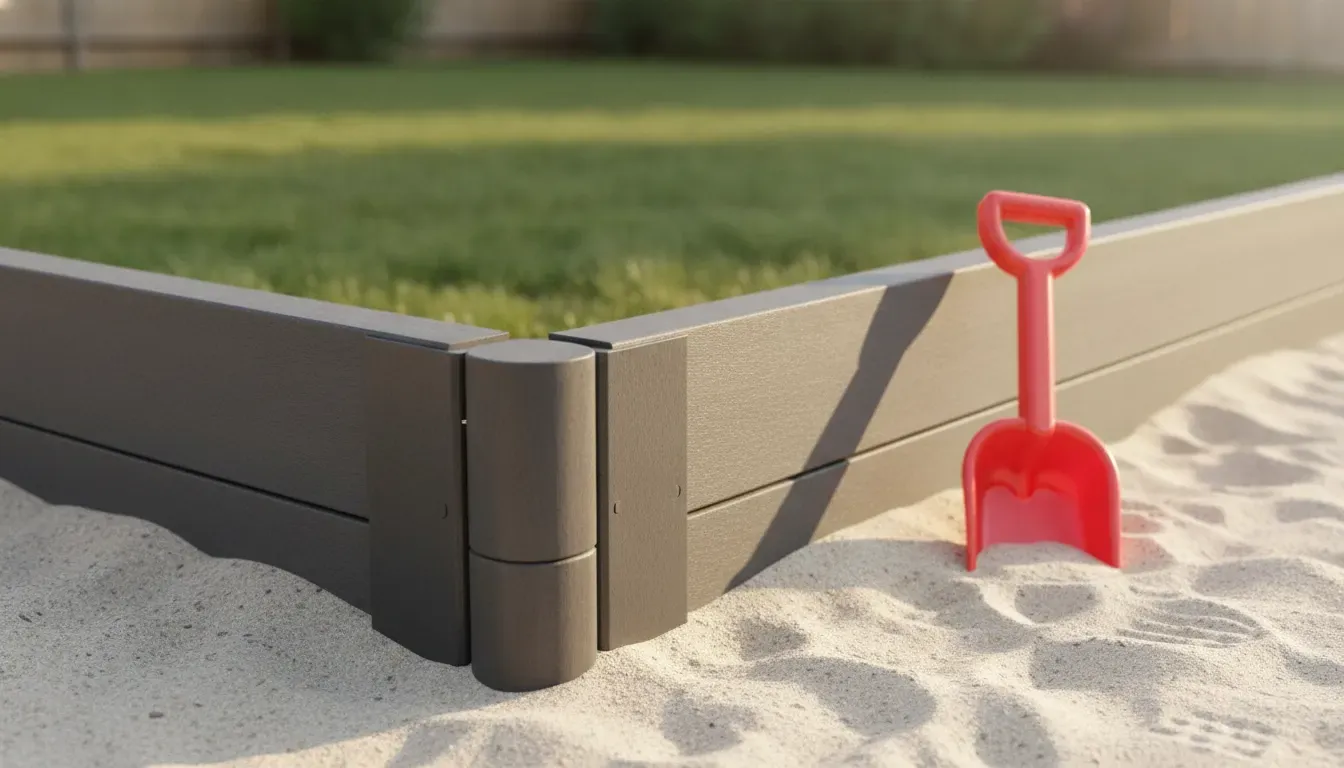
How do edge design and assembly affect sandbox safety?
Short answer: Edge design affects how children sit, climb, lean, and move around the sandbox. Choose a frame with smooth top surfaces, stable connections, and no exposed hardware where hands or knees will land. Assemble every joint fully, then check for movement, gaps, or sharp points at child height.
Check the top edge and corners
Run a clean hand over the accessible top edge before children use the sandbox. Stop and correct anything that feels rough, sharp, loose, or unfinished. Pay extra attention to corners, caps, board ends, and the inside edge where a child may brace a hand while digging. Rounded or smoothly finished components can make inspection easier, but they still need to be checked after assembly and after severe weather.
Check the joints and hardware
A frame can be made from a splinter-resistant material and still become unsafe if a bracket loosens or a fastener protrudes. Follow the manufacturer's assembly instructions and use the specified parts. Do not substitute hardware simply because it looks similar. After assembly, gently test each side for movement, look along the full perimeter, and recheck the joints after the first few play sessions.
Consider how the frame will be used
Children may sit on the border, step over it, or use it as a handhold. That behavior is normal, so choose a design and location that allow caregivers to supervise it. Keep climbable objects and toys organized so children are less likely to use the frame as an unintended step into an adjacent structure. If the sandbox is next to a playset, review the whole area rather than judging the box in isolation.
Are composite sandbox materials safer than treated wood?
Short answer: There is no single material that makes a sandbox universally safe. Composite can avoid natural wood splinters and reduce concerns about rot, while treated wood has its own product-specific instructions and history. Compare the manufacturer's material disclosure, finish, care guidance, and intended use instead of relying on a label alone.
Parents often ask about chemical exposure because young children touch the frame, sand, and toys repeatedly. A responsible comparison separates what is known from what still needs confirmation:
- Ask what the frame contains. Look for a clear description of the core material, coating, and any treatment.
- Ask how the surface is finished. A smooth surface is easier to inspect than a rough or peeling one.
- Follow the intended-use guidance. Do not modify the frame with an unapproved stain, sealant, or coating that could change the surface.
- Keep unrelated chemicals away. Store cleaners, fuel, pesticides, and paints away from the sandbox and toys.
- Read the sand packaging. Choose sand sold for children's play and follow the supplier's handling guidance rather than adding construction materials or unknown fill.
Frame It All states that its composite sandbox boards use food-grade recycled HDPE plastic and sustainably sourced wood fibers. That information can help a parent compare options, but it should not be expanded into an unsupported claim that the finished sandbox eliminates all chemical, allergy, or injury risk. If a child has a specific sensitivity, ask the manufacturer and the child's clinician about the relevant materials.
See Frame It All composite borders for a coordinated play area
Why do sandbox covers and drainage matter?
Short answer: A cover helps keep leaves, animal waste, and other debris out when the sandbox is not in use. Drainage helps keep water from pooling in or around the play area. Use a cover that fits the frame, keep it secured as directed, and make sure rainwater can move away from the base.
Keeping a sandbox covered is a simple habit with a large practical payoff. The American Academy of Pediatrics resource Safety in the Sandbox discusses keeping sandboxes covered when not in use and checking the sand for unwanted material. Before play, remove the cover, inspect the sand surface, and remove visible debris. A cover should not be used to hide a drainage problem or a damaged frame.
Use the cover as part of the design
Choose a cover designed for the sandbox rather than stretching a loose sheet over the top. Check that it can be placed and removed without creating a snag or a heavy object that could fall unexpectedly. Store the cover according to the manufacturer's guidance so it can dry when needed. Never assume a cover is a child restraint or a substitute for supervision.
Plan for water to leave
Choose a level location with a base that does not hold standing water. If you are building on soil, follow the frame and site-preparation instructions and consider how the surrounding grade sends rain toward or away from the sandbox. After a storm, look for puddles, soggy sand, mud at the frame, or water trapped beneath the cover. Correct the site or sand condition before regular play resumes.
How should parents maintain a splinter-resistant sandbox?
Short answer: Inspect the frame, joints, cover, and sand on a regular schedule and after unusual weather or heavy use. Remove debris, address rough or damaged spots promptly, keep the cover clean and dry, and replace any component that cannot be restored to a stable, smooth condition.
A maintenance routine does not need to be complicated. Add these checks to a calendar or another recurring household reminder:
- Before each play session: Look for animal waste, glass, sharp litter, standing water, and damaged toys. Check the frame at child height.
- After rain or strong wind: Confirm the cover stayed in place, inspect for displaced boards or debris, and let wet components dry as directed.
- Weekly during frequent use: Loosen and visually inspect the top layer of sand, remove foreign objects, and check the full perimeter for movement.
- Monthly: Inspect brackets, caps, corners, and fasteners. Look for cracks, roughness, gaps, discoloration, or changes in the frame's shape.
- At the start of each season: Re-read the product instructions, assess the site, and replace worn parts before the sandbox becomes a daily play area.
Do not try to solve every problem with sanding, paint, or sealant. A repair can create a new surface or chemical concern if it is not approved for the material and intended use. Contact the manufacturer when the instructions do not cover the problem. If a board, bracket, cap, or cover cannot be returned to a stable and smooth condition, take the sandbox out of use until the part is replaced.
Is a composite sandbox a good long-term choice for a family?
Short answer: A composite sandbox can be a practical long-term choice when a family values a wood-like appearance, low routine maintenance, and a frame that can be reused later. Evaluate the complete system, including the frame, cover, liner, replacement parts, assembly method, and future conversion options.
Frame It All's sandbox collection presents composite frames as durable and designed for outdoor use. It also describes a future-use option: reusing the frame as a raised garden bed after children outgrow the sandbox. That kind of conversion can extend the usefulness of the purchase, but confirm the exact model's conversion instructions before planning around it.
For families comparing a ready-made kit with a custom build, consider the total ownership questions below:
- Can one adult understand the assembly instructions and inspect the finished frame?
- Are replacement covers, brackets, caps, or liners available for the model?
- Does the shape fit the location while leaving enough space for supervision and access?
- Will the material and finish suit the surrounding patio, lawn, or garden?
- Can the frame serve another purpose when sandbox play ends?
A longer service life is valuable only when the frame remains appropriate for the family and the site. Keep the decision grounded in the actual product specifications and your maintenance capacity, not in an absolute promise of being injury-proof or maintenance-free.
Choose a Frame It All sandbox frame for your backyard play area
Frequently asked questions
Short answer: The safest choice is a well-maintained sandbox with a smooth, stable frame, clean play sand, a properly fitted cover, good drainage, and active adult supervision. Composite may reduce splinter and rot concerns, but parents should still inspect every component and follow the manufacturer's instructions.
What is the best material for a sandbox frame?
The best material depends on the family's priorities and the product's construction. Composite can offer a smooth, wood-like frame with resistance to splintering and rot, while plastic and wood have different inspection and maintenance needs. Compare the full specifications, finish, joints, and care guidance before choosing.
Are composite sandboxes splinter-free?
Composite boards are designed to resist splintering, but no product should be treated as a guarantee against every scratch or injury. Inspect edges, corners, joints, and damaged areas before play. Follow the manufacturer's instructions, and stop using any part that becomes rough, sharp, loose, or unstable.
How often should a sandbox be cleaned?
Check the sand before every play session and remove visible debris immediately. During frequent use, inspect and loosen the top layer regularly, with a deeper review after storms or extended periods without a cover. Follow the sand supplier's and sandbox manufacturer's guidance for replacement and cleaning.
Should a sandbox always have a cover?
A fitted cover is a practical way to keep leaves, animal waste, and other debris out when the sandbox is not in use. It does not replace supervision or fix poor drainage. Remove it before play, inspect the sand, and use or store it according to the manufacturer's instructions.
What age is appropriate for a sandbox?
Age guidance depends on the sandbox, the child, and the level of adult supervision. Use the manufacturer's age recommendations, consider the child's ability to follow simple rules, and stay close enough to intervene. Young children should not be left unattended around a sandbox or other outdoor play equipment.
How can I prevent water from pooling in a sandbox?
Start with a level, well-drained location and follow the product's site-preparation instructions. Keep the cover fitted but allow wet components to dry as directed. After rain, check for puddles, saturated sand, or water at the base. Address the drainage issue before returning the sandbox to regular use.