

A garden gate can do more than mark the entrance to a growing space. The right design can guide foot traffic, keep pets and browsing animals out, make tools easier to carry, and give a productive garden a finished look. These garden gate ideas focus on the decisions that matter before you choose a style, material, latch, or location.
Explore raised garden bed with fence options for a more protected growing space.
Start with the job your garden gate must do
A garden gate works best when its appearance follows its purpose. Decide whether the entrance is mainly for people, a wheelbarrow, a child-safe boundary, animal control, or a transition between outdoor rooms. That decision sets the useful opening width, gate height, latch position, and amount of visibility you need.
Before browsing styles, write down the everyday job your gate must handle:
- Frequent garden access: Choose a smooth-swinging gate with a latch you can operate while carrying a basket or hand tool.
- Wheelbarrow or cart access: Measure the widest equipment that must pass through. Allow room to turn and clear the posts.
- Pet or wildlife control: Reduce gaps at the bottom and sides. Align the gate with the surrounding fence.
- Visual separation: Use a solid or semi-solid design to make the garden feel like a destination rather than an exposed work area.
- Decorative framing: Treat the posts, planting around the entrance, and path surface as part of the design rather than selecting the gate in isolation.
Quick answer: The strongest garden gate ideas begin with the use case, not the gate shape. A decorative entrance that blocks a wheelbarrow or leaves a gap under the fence will create more frustration than character. Define the daily job first, then choose the appearance that supports it.
What are the best garden gate ideas for different spaces?
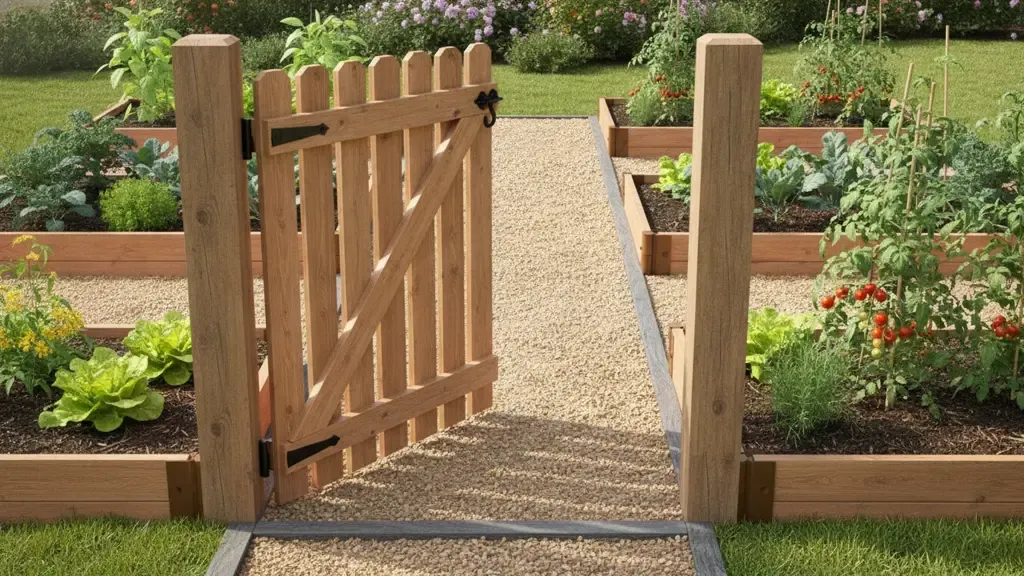
The best garden gate idea depends on the setting around it. A vegetable garden benefits from a practical opening and easy-clean surfaces, while a cottage border can use a more decorative picket or arched gate. Compare the role of the entrance first, then choose a style that supports the way people and animals move through the space.
| Garden setting | Gate direction | Planning priority |
|---|---|---|
| Vegetable garden. | Simple picket, slatted, or framed gate. | Easy daily access, tool clearance, and a reliable latch. |
| Raised bed enclosure. | Gate aligned with the bed or fence system. | Animal control, clean transitions, and clearance above the bed edge. |
| Cottage or flower garden. | Arched, painted, or detail-rich gate. | Proportion, color, and a welcoming view into the garden. |
| Side-yard passage. | Full-height privacy or semi-private gate. | Security, hinge swing, and convenient access from the house. |
| Pathway between garden rooms. | Low gate or open-frame gate. | Visual continuity and an opening that does not make the path feel narrow. |
| Pet or wildlife boundary. | Closed-panel, wire, or close-spaced design. | Gap control, latch security, and a close fit with the adjoining fence. |
Use the table as a starting point, not a rigid rule. A low open-frame gate can work well in a flower garden when the goal is visual continuity. A close-spaced gate can be the better choice in that same garden if a dog, child, or small animal needs a clear boundary. The site, not the label, should determine the final design.
How should you place a gate for comfortable access?
Gate placement should make the approach feel obvious and leave enough room for the gate leaf to swing without striking a bed, shrub, post, or path edge. The most attractive gate will be frustrating if visitors must step sideways, move a planter, or fight a slope every time they enter.
Use this planning sequence before setting posts:
- Trace the approach: Walk the route from the house, shed, driveway, or main path. Note where people naturally approach the garden.
- Measure the clear opening: Measure between the finished inside faces of the posts, not just the gate leaf. Include the width of carts, bins, and tools that need to pass through.
- Check the swing: Open the gate fully in both directions if possible. Keep the swing path clear of raised beds, retaining edges, irrigation lines, and planted areas.
- Account for grade: A sloped path can make a swinging gate drag. Confirm that the bottom edge has room to clear the highest point through the full swing.
- Plan the threshold: Keep the transition stable and easy to cross. A level landing or firm path surface is especially useful when carrying soil, harvest baskets, or watering cans.
For a walking entrance, a clear opening that feels comfortable for the people who use the garden is more important than a standard nominal gate size. If a wheelbarrow must pass through, measure the actual wheelbarrow and add practical hand and steering clearance. Planning from the object that must pass through prevents a beautiful but undersized entrance.
Also check what happens outside the gate. An outward swing may reach a sidewalk, driveway, or neighboring planting bed. An inward swing may collide with a raised bed or leave too little room for a person to stand while unlatching it. Mark the full arc with stakes or temporary tape before committing to post locations.
Which materials and gate styles fit your garden?
Garden gate materials affect the look, weight, maintenance routine, and relationship between the entrance and its surrounding fence. Wood offers warmth and can suit cottage gardens. Metal creates a lighter or more formal look. Mesh prioritizes visibility and animal control. Composite materials can support a low-maintenance landscape design.
Consider the following style directions:
- Wood or wood-look: A classic choice for cottage, farmhouse, and informal vegetable gardens. Look closely at moisture exposure, finish requirements, and how the material will age at ground level.
- Metal: Useful when you want a thinner visual profile, strong lines, or decorative details. Check the finish and the weight of the gate so the posts and hinges can support it.
- Wire or mesh: A practical fit for animal control and vegetable gardens where visibility matters. Select a mesh opening that suits the animals you are trying to manage.
- Composite or coordinated systems: A good direction when you want the gate area, edging, and garden boundaries to look intentional with less routine maintenance. Frame It All's composite outdoor systems use durable, rot-resistant materials, while its patented Snap-Lock approach makes certain raised garden bed assemblies tool-free.
- Mixed materials: Pair a solid lower section with an open upper section, or use a metal frame with wood-style infill. The combination can balance privacy, visibility, and visual weight.
Color matters too. A gate that matches the fence will read as part of the boundary. A contrasting gate can act as a focal point, especially when repeated in nearby planters, path edging, or hardware. Keep the palette limited enough that the entrance feels designed rather than busy.
Proportion is another design tool. A narrow gate with oversized posts can make a small garden feel crowded. A very low gate may look out of place beside a tall boundary. Compare the gate height with the adjoining fence, the scale of the path, and the mature height of nearby plants. The entrance should look intentional from both sides.
Browse landscape edging ideas to define the path and make the garden entrance feel finished.
How can a garden gate help with animal control?
A garden gate supports animal control when it closes the same boundary that the rest of the fence creates. The gate leaf, posts, hinges, latch, and bottom clearance all matter. A narrow opening beside the gate or a large gap underneath can undo the work of an otherwise effective garden enclosure.
Start with the animal you are trying to manage. Small pets and young children may need closer spacing and a latch positioned beyond easy reach. Rabbits and other small wildlife can exploit low gaps, while larger animals may test the strength of the posts and latch. Use the adjoining fence as the reference point so the gate does not become the weak section.
For a raised garden bed, a gate can make regular access easier without leaving the whole growing area open. Frame It All's raised garden bed with fence collection is a relevant option when the goal is to combine a growing area with a boundary that helps protect plants. Verify the exact product configuration, opening, and intended use before choosing a matching gate or enclosure plan.
Inspect the boundary from an animal's point of view. Look along the bottom edge for daylight, check whether a paw can reach the latch, and look for climbable features near the gate. Avoid promising that any gate will stop every animal. The right gap, height, mesh, and latch depend on the species, site, and local conditions.
What hardware makes a garden gate easier to use?
Hardware is a functional design choice, not an afterthought. Hinges determine how smoothly the gate moves. The latch determines how reliably it closes. The handle determines whether the entrance feels natural when your hands are full. Choose hardware that matches the gate weight and the conditions around it.
- Hinges: Use hardware rated for the gate's size and weight. A heavy gate needs more support than a lightweight garden screen.
- Latch: Pick a latch that closes securely and can be operated from the side where users will approach. For animal control, prioritize a positive close over a purely decorative catch.
- Handle: A handle with a comfortable grip is easier to use with gloves or a basket in one hand.
- Stop: A physical stop can keep the gate from swinging too far and protect the posts, hinges, and nearby plants.
- Self-closing feature: This can help when the gate must stay closed, but it should not make the gate difficult for the intended users to open.
Install the latch at a height that works for the people who will use the gate most often. If the gate is part of a child or animal boundary, balance convenient access with the need to prevent an easy opening. A latch that is technically secure but awkward to reach may be left unclosed, which defeats its purpose.
If you are adapting a framed opening or want to reinforce a gate project, Frame It All's GateMate Adjust-A-Gate frame kit is a product-specific option to research. Confirm the current product details and the dimensions of your opening before ordering.
How do you plan maintenance before choosing a gate?
Maintenance is easier to manage when it is considered during design. A gate that sits close to wet soil, sprinklers, mulch, or dense plants will experience different conditions from one mounted beside a dry, paved path. Choose the material and finish based on the routine you are willing to follow, not only on the first impression.
Build a simple maintenance plan around these checks:
- Inspect hinges and latches at the start of the growing season and after periods of heavy weather.
- Clear mulch, soil, leaves, and plant growth from the bottom edge so the gate does not drag.
- Check that the posts remain plumb and that the latch still meets cleanly.
- Touch up or reseal materials according to the manufacturer's care instructions.
- Trim plants that conceal the opening, catch on the hardware, or block the swing path.
- Look for new gaps along the bottom and sides if animal control is part of the gate's job.
Plan maintenance access as carefully as garden access. A gate should open wide enough to clean around its hinges and inspect the latch. Keep fast-growing plants from covering the hardware, and leave enough space to remove leaves or mulch from the threshold. These small choices make seasonal checks easier to complete.
When comparing garden gate ideas, think about the whole entrance: gate material, post material, path, edging, plants, and hardware. A coordinated, appropriately sized entrance will usually look better and need fewer workarounds than a gate chosen as a last-minute add-on.
Explore raised garden bed with fence options for a more functional garden boundary.
Frequently asked questions about garden gate ideas
What is the best width for a garden gate?
The best width is the clear opening needed by the people and equipment using the garden. Measure the widest tool, cart, or wheelbarrow that must pass through, then add enough clearance for comfortable steering and hand access. A walking-only entrance can be narrower than an entrance used for regular garden equipment.
Should a garden gate swing in or out?
Choose the direction that keeps the approach clear and avoids beds, walls, steps, and property constraints. An inward swing keeps the gate within the garden boundary, but a tight planting layout may favor an outward swing if it is safe and permitted. Test the full arc before installing posts.
How do I keep animals from getting under a garden gate?
Match the bottom clearance to the animal you are trying to keep out. Align the gate with the adjoining fence, and use a threshold or buried barrier when appropriate for the site. Keep the gate closed with a reliable latch, and check for new gaps after soil settles or the path changes.
What material lasts longest for a garden gate?
Longevity depends on the material, construction, climate, installation, and maintenance. Compare how each option handles moisture, sunlight, ground contact, hardware load, and seasonal movement. Rot-resistant composite materials can reduce some routine maintenance, while metal and wood each have their own finish and corrosion or moisture considerations.
How can I make a garden gate look more welcoming?
Give the entrance a clear path, proportionate posts, a comfortable handle, and planting that frames rather than blocks the opening. Repeat a nearby color or material in the gate, edging, or planters. An uncluttered approach often makes a bigger visual difference than adding extra decoration.