

Fencing that won't rot starts with a material designed for repeated moisture exposure. A fence may face rain, irrigation, humidity, shade, wet soil, and changing temperatures. Compare more than a showroom sample. Consider boards, posts, fasteners, joints, and finishes. Each part must respond to the site.
Explore Frame It All Cap Composite fencing for a lower-maintenance option designed to resist rot.
Short answer: Composite, vinyl, and metal fencing do not rot like traditional wood. Capped composite adds full protection around a composite board core.
Frame It All Cap Composite fencing uses a 360-degree protective cap and is backed by a 30-year warranty.
This guide explains why wood decays and compares common fencing materials. It also gives homeowners and installers a practical way to evaluate moisture exposure, maintenance, protection, and warranty terms. Consider long-term material use, too. No fence should be treated as maintenance-free without reviewing its product guidance.
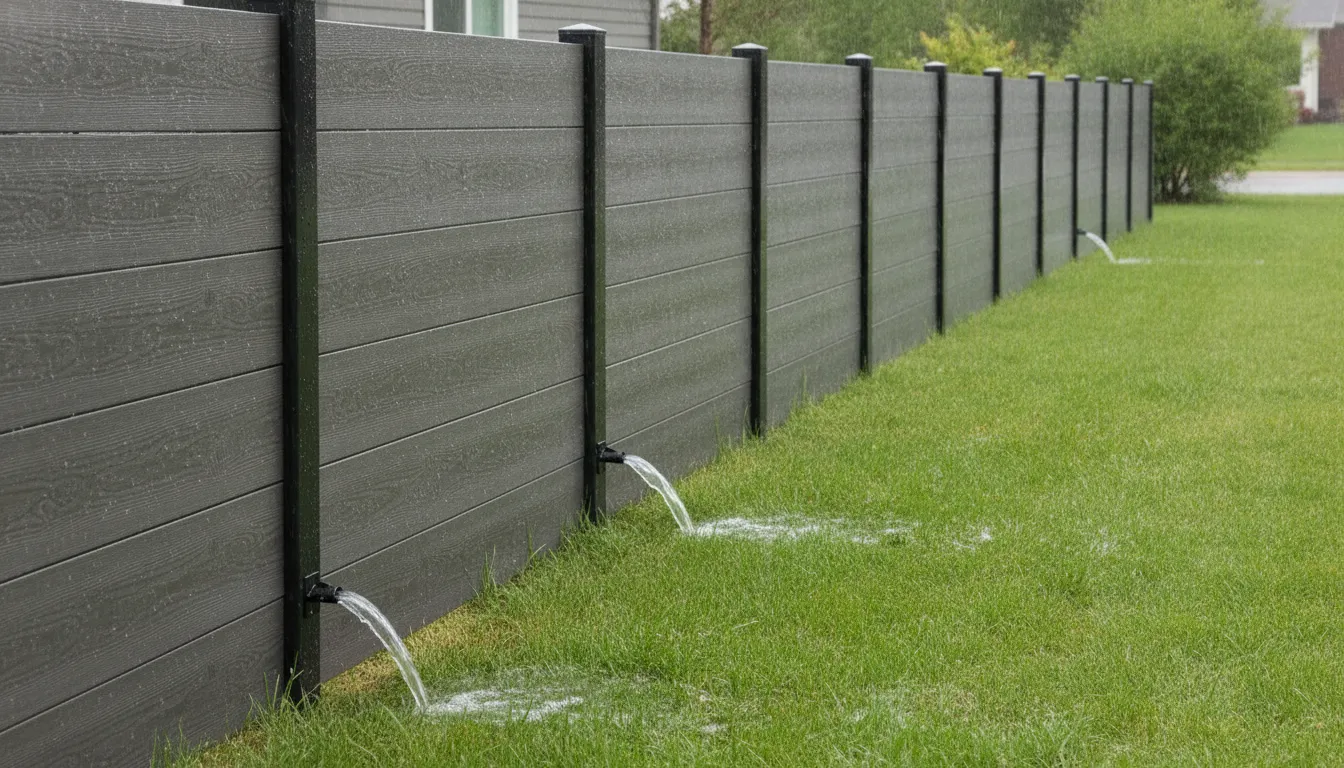
Why does wood fencing rot?
Wood fencing rots when it stays damp long enough for decay organisms to grow. Wood is a biodegradable material, so repeated exposure to rain, irrigation, wet soil, and poor drainage creates conditions that gradually break it down. Penn State Extension explains that brown rot and other fungal decay can reduce the strength of wood as the affected material loses important structural components.
Fungi need food, water, oxygen, and a favorable temperature. Wood provides the food, wet weather supplies water, and outdoor exposure supplies oxygen. Keeping wood dry can slow the process, but a fence in a damp landscape may be difficult to keep consistently dry. Penn State Extension explains how fungal decay affects wood.
Why the soil line is a weak point
Fence posts face a difficult environment where they meet the ground. The upper section of a wood post can experience both moisture and oxygen, creating conditions that support decay. Posts set in concrete are not automatically protected from surrounding moisture. Once rot begins in this zone, the damage may remain hidden until the post loses stability.
Decay is more than a surface blemish. Fungal growth progressively damages wood cell walls, reducing strength and weight as material is consumed. That can weaken the components holding fence panels upright even when visible boards still look acceptable.
Can maintenance prevent wood rot?
Drying, sealing, staining, and painting can help manage exposure. Preservative treatment can also improve wood's resistance to decay. These measures do not change the fact that wood remains biodegradable. Over time, a wood fence still needs inspections and periodic maintenance to manage weathering, finish failure, and rot-related repairs.
For homeowners who want less recurring upkeep, the material choice matters. A non-wood composite is not susceptible to the fungi and bacteria that cause wood decay in the same way. A capped composite can add another barrier by protecting the board core from water absorption.
What fencing materials do not rot?
Material answer: Composite, vinyl, and metal do not rot like traditional wood, while cedar, redwood, cypress, and treated lumber remain wood products that can eventually decay. The practical difference is biological vulnerability. A wood treatment can extend resistance, but it does not turn biodegradable wood into a permanently decay-proof material.
Start by separating materials that are biologically vulnerable from materials that do not decay like wood. Cedar, redwood, and cypress can offer greater natural decay resistance than some other wood species, but they remain wood. Treated wood uses preservatives to extend resistance, but treatment does not make the material permanently immune to outdoor decay.
| Material | Rot response | Key consideration |
|---|---|---|
| Cedar, redwood, or cypress | Higher natural resistance | Still biodegradable and may require finish maintenance. |
| Treated wood | Improved, not permanent | Preservatives can extend service life, but the wood can still break down. |
| Composite | Does not rot like wood | Resists the biological decay associated with wood, with maintenance needs that differ from wood. |
| Capped composite | Core protected from moisture | A protective cap surrounds the composite core and helps limit water absorption. |
| Vinyl or metal | Does not rot like wood | These materials have different maintenance, appearance, impact, and installation considerations. |
The practical distinction is that wood treatments address a vulnerable biological material, while composite avoids the fungi and bacteria associated with wood decay. Capped composite adds protection around the core rather than relying on a finish that must be renewed. Every material still deserves product-specific care and inspection, especially at posts, fasteners, joints, and drainage areas.
For a second comparison angle, see Frame It All's composite fence buyer's guide and its discussion of appearance, maintenance, and long-term use.
Review Frame It All Cap Composite fencing and its 360-degree protective cap.
How do you choose fencing that won't rot?
Selection answer: Choose fencing that won't rot by matching the material and board construction to the site's moisture exposure, then compare upkeep, component protection, warranty terms, appearance, and installation requirements. The strongest choice is the one that addresses the whole fence system instead of only the visible face of a board.
Use the following steps to compare materials for a residential yard or a larger installation project.
-
1. Assess moisture exposure
Look for irrigation spray, heavy rainfall, shade, poor drainage, standing water, and soil contact. These conditions increase the importance of moisture management. If the yard stays damp, a biodegradable material may demand more maintenance than you want to provide.
-
2. Evaluate every major component
Do not inspect only the visible pickets or rails. Ask what material is used for posts, caps, fasteners, brackets, and other structural parts. The most vulnerable component can determine when the fence needs attention.
-
3. Match upkeep to your routine
Wood commonly requires finish maintenance and ongoing inspection for weathering and decay. If you prefer to minimize painting, staining, sealing, and rot repairs, compare a composite option with that maintenance cycle in mind.
-
4. Check whether protection covers the full board
Ask whether the product protects only an exposed face or surrounds the board core. Frame It All Cap Composite fencing uses a 360-degree protective cap designed to fully encapsulate the composite core and help prevent water absorption.
-
5. Read the warranty terms
A warranty is a useful comparison point, but it does not eliminate site conditions or care requirements. Review coverage, exclusions, and required maintenance. Frame It All Cap Composite fencing is backed by a 30-year warranty.
-
6. Consider replacement and material use
Long-term value includes more than the initial purchase. Compare expected maintenance, durability information, warranty coverage, and the likelihood of rot-related repairs or replacement. Review the manufacturer's current product documentation when recycled content or material sourcing is part of your decision.
The right choice depends on the balance your yard requires: moisture resistance, protection for vulnerable components, manageable upkeep, clear warranty coverage, appearance, and installation needs. A contractor can use the same checklist to discuss site conditions with a homeowner before selecting a complete system.
How does a 360-degree cap protect composite fencing?
Construction answer: A 360-degree cap surrounds a composite board's core instead of leaving the edges exposed. That construction helps limit water absorption at the top, bottom, sides, and other exposed surfaces. It does not eliminate the need for sound drainage, correct fasteners, careful joints, or manufacturer-specific care.
Composite fencing is designed to avoid the biological decay associated with wood, but composite boards are not all constructed the same way. The key question is how completely the board is protected from moisture. Frame It All Cap Composite fencing uses a 360-degree protective cap that surrounds the composite core.
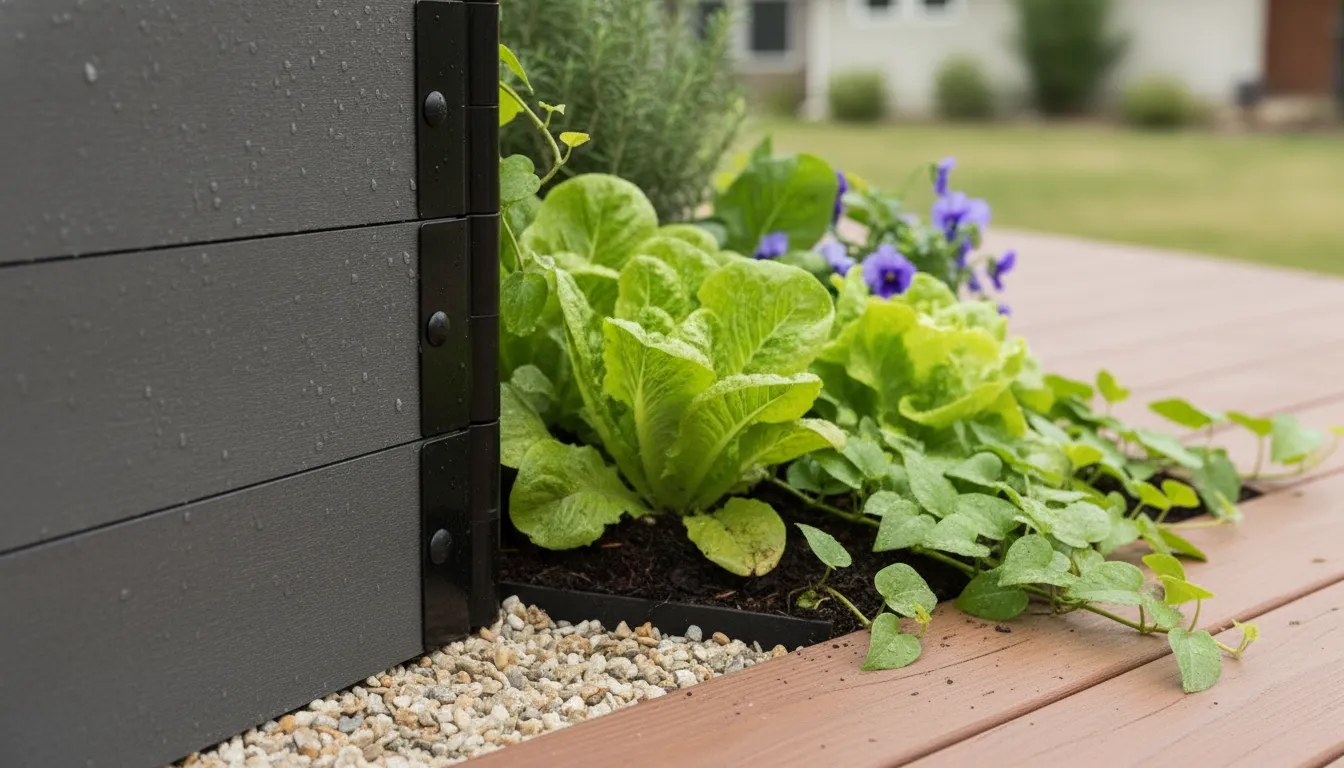
Full coverage matters because water can enter through exposed surfaces or edges on some uncapped boards. Repeated exposure to rain, humidity, and changing outdoor conditions can affect a material over time. A protective cap helps limit that absorption before it reaches the core. The protection is built into the board rather than applied as a coating homeowners must continually renew.
What is the difference between capped and uncapped composite?
Uncapped composite is still distinct from traditional solid wood and is not susceptible to wood-decay fungi in the same way. However, an exposed core may have less protection from moisture than a board enclosed on every side. When moisture resistance is the main reason for replacing wood, ask how the board is protected around its full perimeter.
Cap Composite uses a layered design. The composite core provides the board material, while the cap helps isolate it from water and outdoor exposure. This does not make installation variables irrelevant. Drainage, fasteners, posts, joints, and site conditions still matter. It does address a central source of outdoor deterioration: repeated moisture exposure.
Composite vs. wood fencing: maintenance and long-term value
Value answer: Composite fencing can reduce dependence on the recurring staining, painting, sealing, and rot repairs associated with wood. Compare that lower-maintenance positioning with the product's actual warranty, care instructions, site conditions, appearance, impact requirements, and installation needs. No material should be treated as a substitute for proper construction or inspection.
Wood can look excellent when freshly finished, but its upkeep is part of ownership. Traditional wood fences often require staining, painting, sealing, and repairs as weather exposure accumulates. Composite fencing takes a different approach. It is positioned as a durable, low-maintenance alternative that does not require the same cycle of cosmetic coatings and rot repairs.
Maintenance that stays manageable
With wood, maintenance is closely tied to preserving a biodegradable material against outdoor conditions. Even when a homeowner keeps up with finishes, the fence still needs attention as the surface weathers. Composite reduces dependence on that cycle by resisting the biological factors associated with wood decay.
This lower-maintenance profile can matter for both homeowners and contractors. Frame It All serves residential and commercial customers nationwide, so consistent material expectations can be valuable across different project types. Buyers should still follow the manufacturer's care guidance and inspect any fence for movement, impact damage, drainage problems, or loose components.
Durability backed by a defined warranty
Warranty coverage gives buyers a concrete reference point when comparing long-term products. Frame It All Cap Composite fencing is backed by a 30-year warranty. Read the actual warranty terms, including exclusions and care requirements, rather than treating a warranty as a promise that every site condition will be identical.
A more purposeful material choice
Frame It All states that its fencing boards use recycled plastic and sustainably sourced wood fiber. Sustainability claims can depend on product configuration and current documentation, so review the manufacturer's product information when this factor affects your purchase decision. The important comparison is not a vague environmental label. It is whether the product's documented materials, expected upkeep, and warranty fit the project's priorities.
For many homeowners, the strongest case for composite is the combination of lower routine maintenance, documented warranty coverage, and a board design intended for long-term outdoor use. It is a practical path toward fencing that won't rot while keeping material and upkeep considerations in view.
Questions installers and homeowners should ask
Before choosing a fence system, ask where water is most likely to collect and which components are exposed there. Confirm whether the boards, posts, rails, fasteners, and end cuts have different care requirements. Ask for current product specifications and warranty terms, then compare those details with the conditions at the property. This process is more reliable than choosing a material based only on a showroom sample or a broad label such as weather-resistant.
It is also useful to separate rot resistance from every other performance question. A material that does not rot like wood can still be affected by impact, movement, installation errors, drainage, or prolonged exposure to harsh weather. Those factors do not make a composite choice unsuitable. They simply show why a complete fence evaluation includes the site, the complete system, and the manufacturer's guidance.
For current product details, review the Cap Composite fencing page. If your broader project also includes garden structures, Frame It All's composite raised garden bed collection and landscape edging collection show how the company approaches durable outdoor materials across applications.
Explore Cap Composite fencing for a durable, low-maintenance alternative to wood.
Frequently Asked Questions
What fencing materials do not rot?
Composite, vinyl, and metal do not rot like traditional wood. Cedar, redwood, and cypress can resist decay better than many wood species, but all wood remains biodegradable. Composite fencing avoids the fungi and bacteria associated with wood decay.
Is composite fencing rot-proof?
Composite fencing is designed to resist rot and environmental decay rather than absorb moisture like wood. Frame It All Cap Composite adds a 360-degree protective cap around the board core. It is backed by a 30-year warranty. Review the warranty terms for applicable conditions.
Why do wood fence posts rot?
Wood posts are vulnerable where they meet the ground. Moisture and oxygen can support fungal decay. That zone can weaken before damage is obvious on the visible boards. Keeping wood dry can slow decay, but it cannot remove the material's underlying biological vulnerability.
What maintenance does a rot-resistant fence need?
Maintenance depends on the material and installation conditions. Wood commonly needs finish maintenance and ongoing inspection for weather and rot. Composite is positioned as a lower-maintenance alternative, but every fence should be checked periodically for damage, movement, drainage issues, and loose components.