

Many raised-bed problems begin before the first seed is planted. Soil that stays waterlogged, collapses around roots, or lacks organic matter can limit growth even when the bed itself is well built. A raised bed gives you the opportunity to start with a controlled growing environment instead of inheriting compacted, depleted, or questionable native soil. If you are ready to build your growing space, browse the raised garden bed collection to compare sizes and find the footprint that fits your yard.
The best soil for raised garden beds is a balanced, well-draining mix that holds moisture without becoming soggy, provides steady nutrients, and remains loose enough for roots to expand. For most vegetables and flowers, aim for soil with 25% to 50% organic matter and a pH between 6.2 and 6.8. The range recommended by the University of Maryland Extension.
Getting that balance right does not require one rigid recipe. The best choice depends on your bed depth, available materials, budget, and whether you are filling a new bed or improving an existing mix. Start by understanding the physical and chemical traits that healthy raised-bed soil must provide.
What Makes the Best Soil for Raised Garden Beds?
Great raised bed soil gives roots a stable environment to grow without becoming dense or waterlogged. It should be loose, deep, and crumbly, with enough structure to hold water, air, and nutrients around the root zone. At the same time, excess rain or irrigation must be able to percolate downward rather than collect around the roots. This balance is what makes a raised bed productive even when the native soil beneath it is compacted, sandy, rocky, or otherwise difficult to garden in.
Look for a loose texture with reliable drainage
When you squeeze a quality mix, it should hold its shape briefly and then break apart easily. A heavy, sticky mix can restrict air and root growth, while an overly loose, gritty mix may drain so quickly that plants struggle to access water. The bed's depth and open drainage path work together with the mix. More soil volume gives roots room to develop, and the raised structure helps separate that growing environment from poor native soil below. The University of Maryland Extension describes ideal raised bed soil as deep enough to hold water for root uptake while allowing excess rainfall to move downward quickly. Learn more about raised bed drainage and soil structure.
Use organic matter as the soil's working engine
Organic matter supports a crumbly structure and helps the mix retain moisture without sacrificing drainage. For a raised bed containing garden soil, the recommended organic matter content is 25% to 50% by volume. Compost is a common source, but it should be mature and blended evenly rather than added as a concentrated layer. Too little organic matter can leave soil hard and slow to drain, while too much can lead to settling or an imbalanced nutrient environment.
Finally, check the chemistry, not just the texture. For most annuals, perennials, flowers, and vegetables, a soil pH between 6.2 and 6.8 is considered ideal. A laboratory soil test can confirm pH and nutrient levels before planting, especially when you are filling a large bed with several materials. For a practical starting point, use this first-season checklist for an ideal soil environment as you prepare the bed and choose plants.
Which Raised Bed Soil Mix Recipe Should You Choose?
There is no single recipe for every raised bed. The right choice depends on how much you want to mix, how readily ingredients are available, and whether you are filling a shallow bed or a deeper growing system. Each option below can work when the finished soil is loose, well-drained, and rich in organic matter.
Choose a recipe based on your priorities
| Recipe | Ingredients | Best for | Cost and effort |
|---|---|---|---|
| Mel's-Mix-style | 1/3 peat moss, 1/3 vermiculite, and 1/3 compost | Gardeners who want a light, moisture-holding mix with a consistent formula | Higher ingredient cost and more measuring, especially for large beds |
| Topsoil and organic matter | 50% topsoil, 30% compost, and 20% other organic matter | Most new beds, especially when you want mineral soil plus compost without using a large volume of vermiculite | Usually moderate cost and effort; ingredients are widely available |
| Bagged organic garden soil | Organic bagged garden soil used as directed, with optional compost based on the product and soil test | Small beds, first-time gardeners, or projects where convenience matters most | Fastest to install, but the per-cubic-foot cost can be higher for deep or large beds |
The classic one-third formula, often called Mel's Mix, combines peat moss, vermiculite, and compost in equal portions. It is straightforward to calculate and produces a light medium, but peat moss has sustainability trade-offs because peatlands are important carbon-storing ecosystems. If you choose it, buy responsibly sourced material and consider a suitable renewable or locally available alternative where appropriate. The recipe itself is documented in this comparison of raised bed soil mixes.
The 50/30/20 blend is a practical middle ground. Topsoil supplies mineral content and structure, compost contributes organic matter, and the remaining portion can be another organic material selected for your local availability. The same comparison documents the ratio, while Iowa State University Extension offers two useful alternatives: equal parts topsoil, organic matter, and coarse sand, or approximately 70% topsoil and 30% compost.
Bagged organic garden soil is the simplest route when you are filling a small bed or do not want to source separate ingredients. Read the label rather than assuming every product has the same texture or nutrient content. For any recipe, avoid filling by guesswork alone. Measure the bed volume, blend thoroughly before planting, and use a soil test when you need to confirm pH or nutrient levels.
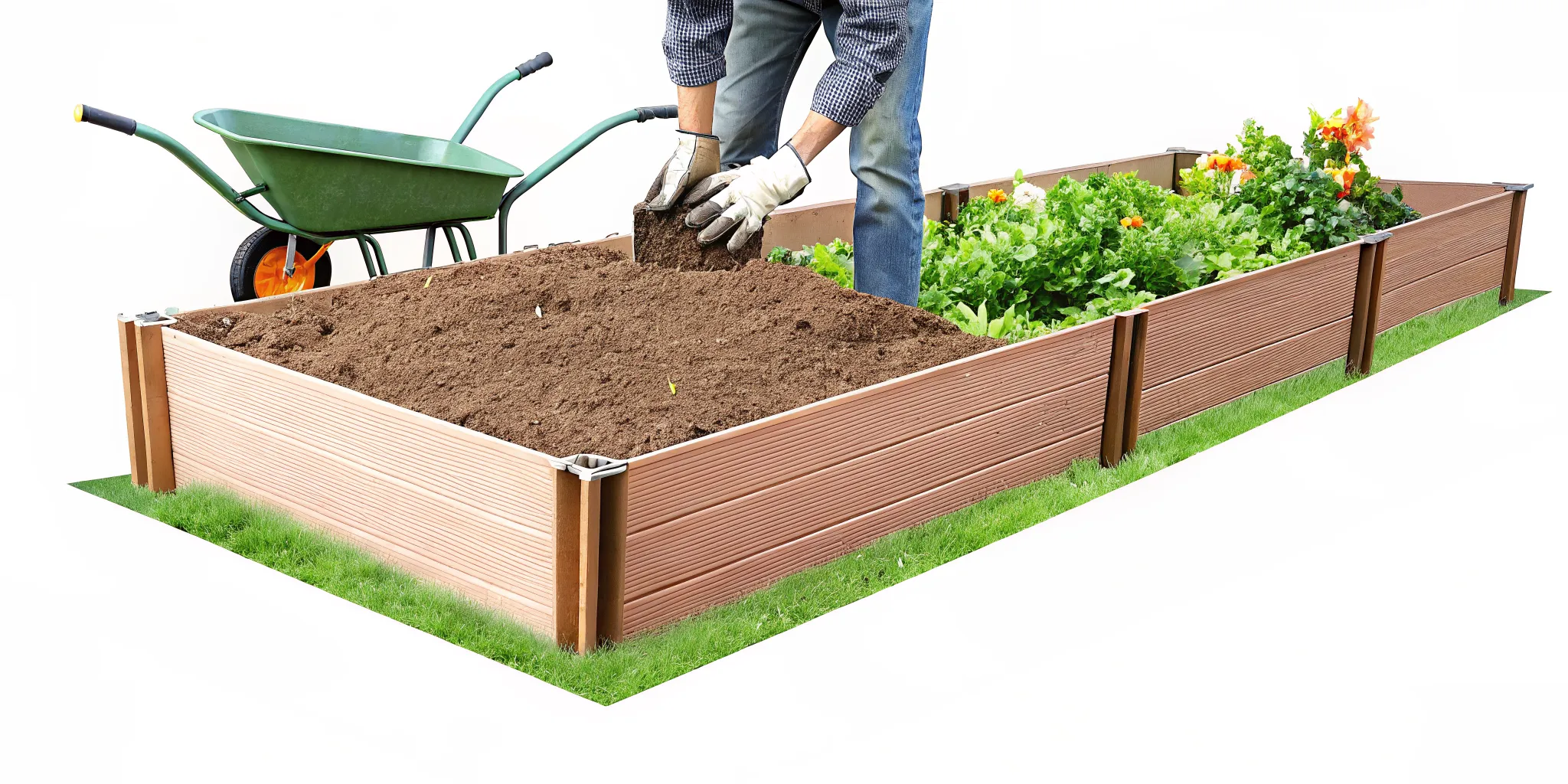
What Should You Put in the Bottom of a Raised Garden Bed?
A raised bed does not have to be filled entirely with purchased soil on day one. The lasagna method, also called no-dig layering, builds a productive growing medium from materials placed in broad, alternating layers. As those layers break down, they add organic matter while reducing the amount of finished soil you need to buy.
Layer browns and greens to build a no-dig base
Start by placing a layer of brown materials across the bottom. Plain, unwaxed cardboard or several overlapping layers of newspaper work well when you are building over turf or a weedy area. Overlap the seams so grass and perennial weeds have fewer openings. Add carbon-rich materials such as untreated leaves or straw, then alternate them with nitrogen-rich greens such as fresh grass clippings or finished plant material. Keep the layers loose rather than packing them down, so water can move through the bed and decomposition can continue.
For a simpler installation, the University of Maryland Extension recommends laying plain cardboard or overlapping newspaper on the site and covering it with 2 to 4 inches of compost. The turf and weeds should die in 6 to 8 weeks and decompose in place, creating a practical no-till foundation for the bed. Read the extension guidance on filling raised beds before preparing a food-growing site.
Once the bottom layers are in place, continue alternating browns and greens until the bed is partially filled. Finish with a substantial layer of quality raised-bed soil and compost where plant roots will grow. Do not rely on fresh manure or thick layers of undecomposed grass at the surface, since active decomposition can temporarily tie up nutrients and create excess heat. A finished compost layer provides a more stable planting zone.
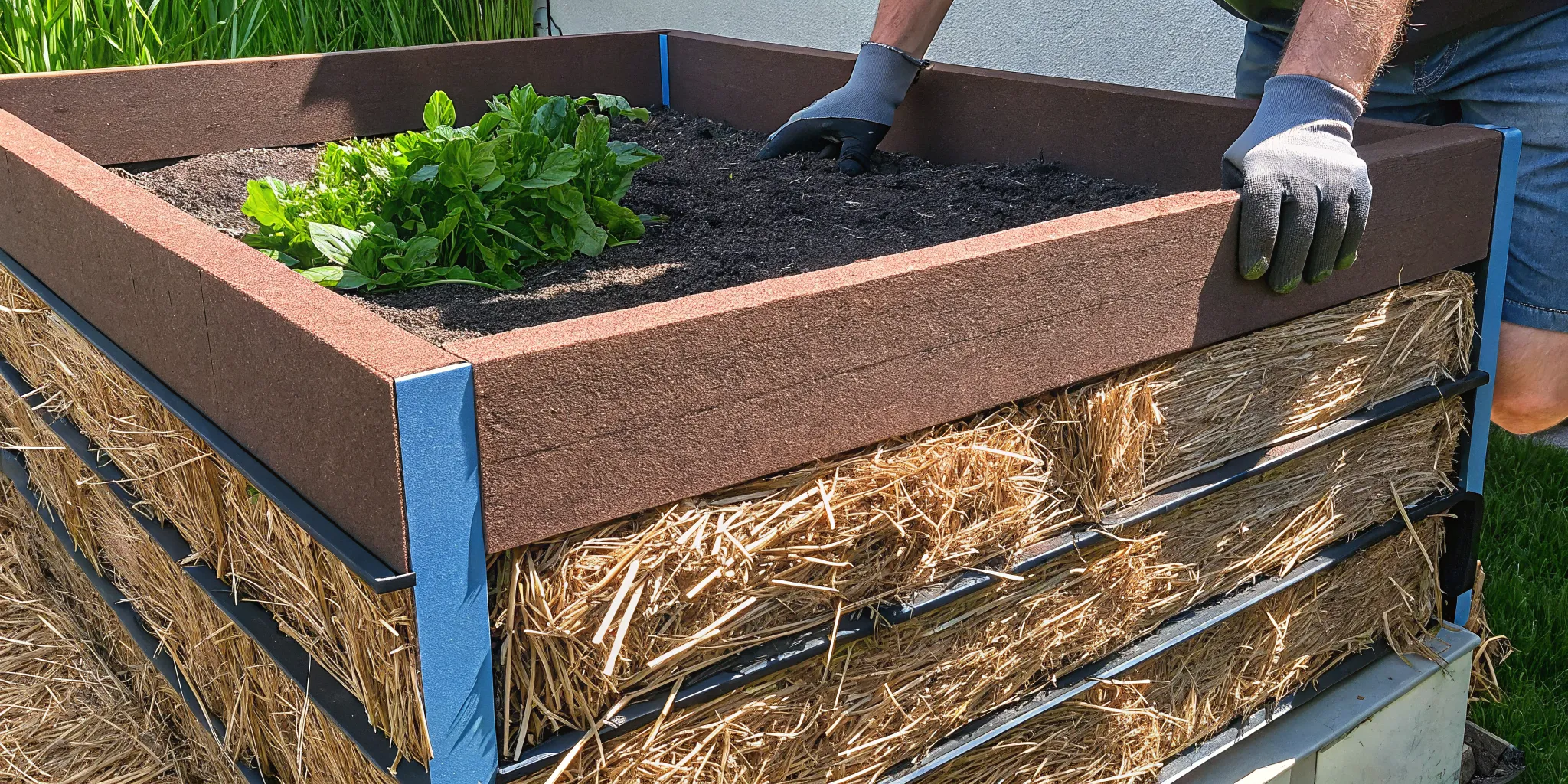
This approach is especially useful for a deep bed, where filling every inch with purchased mix can become expensive. The lower organic layers gradually settle and contribute carbon-rich organic matter, while the upper soil supports immediate planting. Plan for settling, leave room to top-dress with compost, and check the bed level before adding your final planting layer. For a deep bed with more growing volume, compare the larger raised bed configurations in the Frame It All collection.
Why Do Raised Beds Beat Poor Native Soil?
Native soil can be difficult to manage when it has been compacted by construction, disturbed by development, or affected by a history of urban land use. A raised bed creates a defined growing environment above that challenge. Instead of trying to repair every layer of the ground, you can fill the bed with a balanced mix and give plants loose, productive soil from the start.
A cleaner, warmer, more manageable growing environment
Safety is one reason to separate the growing medium from questionable native soil. The University of Minnesota Extension notes that raised beds can help reduce the risk of gardening in soil contaminated with lead or other heavy metals. If you are growing food in an urban or previously developed area, test the native soil and follow local guidance before planting. A raised bed is a practical way to control the soil that comes into direct contact with your crops. A raised bed, however, does not replace appropriate testing or safe site planning.
Raised beds also help address compaction. Heavily disturbed soils can become dense and difficult to work, limiting the air and water movement roots need. Filling a Frame It All bed with fresh, well-structured soil lets you establish the drainage and texture your plants require without repeatedly digging into hard ground.
Weeds are another advantage. Persistent perennial weeds are often less of a problem in raised beds than in traditional in-ground gardens, especially when the bed is filled with clean soil and the site is prepared carefully. Keep the growing surface covered with mulch and remove weeds while they are small to reduce future maintenance.
Raised soil can warm earlier in spring, giving you a head start on planting. That earlier start, combined with a controlled soil profile, makes productive gardening possible even when the native ground is poor. Frame It All's Snap-Lock system makes assembly tool-free, so you can focus on choosing the right location and filling the bed well. For practical soil mix basics, see the definitive guide to ingredients, ratios, and filling strategies.
How Much Soil Does Your Raised Bed Need?
Accurate soil planning helps you order enough material without creating unnecessary leftovers. Measure the growing space inside the bed, not the outside frame, and use the finished soil depth for your calculation. The result gives you a practical estimate for a loose, well-draining mix, including the best soil for raised garden beds.
-
Measure the bed's length, width, and fill depth
Record each measurement in feet. For a rectangular bed, measure the interior length and interior width, then determine how many feet of soil you plan to add. A 4-foot by 8-foot bed filled to 1 foot deep, for example, has a growing volume of 32 cubic feet. If your bed has an irregular shape, divide it into simple rectangles, calculate each area, and add the results.
-
Calculate cubic feet
Multiply length by width by height: length x width x height = cubic feet. Keep the units consistent. If the bed is 6 feet long, 3 feet wide, and 1 foot deep, the calculation is 6 x 3 x 1, or 18 cubic feet. For a shallower bed, use the actual soil depth rather than the full wall height.
-
Convert the result for bulk soil
Bulk soil is commonly sold by the cubic yard. Divide your cubic-foot total by 27 because one cubic yard contains 27 cubic feet. The 18-cubic-foot example requires about 0.67 cubic yards. Round up slightly to account for settling, but avoid over-ordering before the soil has been placed and watered.
-
Convert the result for bags
Check the volume printed on each bag, then divide the bed's cubic feet by that bag volume. For instance, 18 cubic feet divided by 2 cubic feet per bag equals 9 bags. Bag sizes vary, so use the label rather than assuming every product contains the same amount. You can also use the soil volume calculator to check your estimate.
-
Match soil volume to the bed size
Choose a size that fits both your footprint and growing goals. A compact 4-foot by 4-foot Raised Garden Bed - GardenBLOX Capped suits a smaller patio, while a 4-foot by 8-foot or wider 4-foot by 16-foot capped bed gives you far more growing space for vegetables. The 8-foot by 8-foot capped bed offers the largest single growing area for a big garden. Review the full raised garden bed collection to confirm dimensions, depth options, and current pricing before ordering soil, so the bed capacity and material quantity align.
How Do You Care for and Test Raised Bed Soil?
Even a well-built raised bed needs occasional soil care. Organic matter breaks down as microorganisms process it, while watering and planting can gradually change the balance of air, moisture, and nutrients. A simple maintenance routine keeps the root zone productive without relying on guesswork.
Start with a baseline soil test
Before the first planting, take a representative sample from the filled bed and submit it to a soil testing laboratory. A lab test is more reliable than a basic do-it-yourself tester for measuring pH and nutrient levels. The results give you a starting point and help prevent unnecessary amendments. For most vegetables, flowers, annuals, and perennials, a pH between 6.2 and 6.8 is considered ideal. Follow the testing laboratory's recommendations for correcting a reading that falls outside that range.
Plan a second test about one year after installation. By then, the different components of the bed have had time to fully mix and react, creating a more useful baseline for future amendments. After that, test according to your crop needs, local extension guidance, or any change in plant performance. The University of Maryland Extension provides additional guidance on raised-bed soil testing.
Replace what the season removes
Each year, add a thin top-dressing of mature compost to the surface and work it gently into the upper layer if the bed structure and plants allow. Compost replenishes organic matter and supports the loose, crumbly texture roots need. Aim for organic matter representing roughly 25% to 50% of the bed's volume, the range recommended for raised-bed soil. Avoid adding large amounts automatically, however. Excess compost can contribute to nutrient imbalances, so use your test results to guide the quantity and type of amendment.
Amend based on evidence
A low nutrient reading may call for a specific nutrient amendment, while poor structure may be better addressed with compost or another suitable organic material. Do not add lime, sulfur, fertilizer, or extra topsoil simply because a recipe recommends it. Match the amendment to the lab result, apply the stated rate, and retest when appropriate. This measured approach keeps the soil supportive of plant growth while avoiding buildup that can harm roots.
For more answers about garden soil questions, review Frame It All's gardening FAQ. Before you plant, choose the bed size that matches your soil volume, then shop the raised garden bed collection to get started.
Frequently Asked Questions
Can I use regular garden soil in a raised bed?
You can, but garden soil works best when blended with compost and other materials that improve drainage and aeration. Avoid filling a raised bed with dense native soil alone, especially where the ground is compacted or poorly drained. A soil test can identify pH and nutrient needs before planting.
Should I put anything on the bottom of a raised garden bed?
A bottom layer is not always necessary. If the bed sits over turf or persistent weeds, lay plain cardboard or overlapping newspaper beneath it and cover the material with 2 to 4 inches of compost. The turf and weeds typically die and decompose in place within 6 to 8 weeks, according to the University of Maryland Extension: soil-fill guidance.
Is potting soil suitable for a raised garden bed?
Potting soil can be used, particularly in smaller beds or where a lightweight, ready-to-use medium is important. For a larger raised bed, buying only potting soil can be unnecessarily expensive. A purpose-built blend of quality topsoil, compost, and a material that supports drainage is usually more practical.
How much compost should I add to raised bed soil?
Aim for organic matter making up about 25% to 50% of the soil by volume. Compost should be mature and well blended rather than applied as a thick, concentrated layer. Because too much organic matter can change nutrient availability and settling behavior, use a soil test to guide future additions. See the University of Maryland Extension recommendations.
What pH should raised bed soil have?
For most vegetables, flowers, and annual or perennial plants, a pH between 6.2 and 6.8 is a useful target. Test the finished mix before planting, then follow the laboratory's amendment recommendations instead of adding lime or sulfur by guesswork. Different crops may have narrower preferences, so check the needs of specialty plants separately.
Get Started with the Right Raised Garden Bed
Once you know the soil blend and volume your plants need, the right bed configuration can make setup simpler and help you create a productive growing space. Browse the raised garden bed collection to compare sizes and find an option suited to your available space. Shop the raised garden bed collection today and give your soil mix and plants room to thrive.